



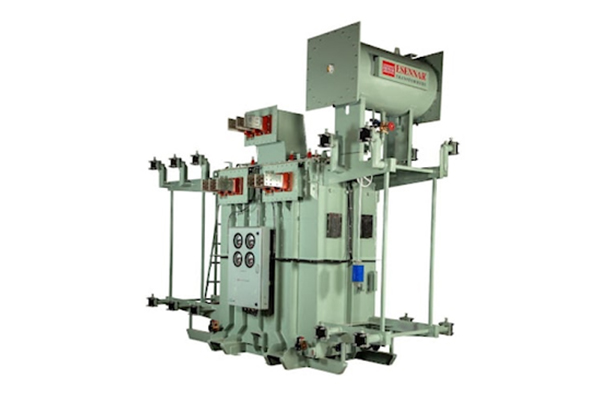
All solar power plants, whether rooftop systems or utility-scale solar farms, rely on the transformer in order to transfer power effectively to the grid. We have to find a reliable way of determining transformer capacity in a solar plant.
It is a typical technical question of EPC contractors, consultants and project developers over 30 years in the transformer manufacturing and power engineering industry.
The solution is not a mere formula. Transformers have to be sized taking into account electrical theory, site conditions, grid requirements, thermal characteristics and durability of operations over a long period. An undersized transformer will lead to overheating, insulation, voltage instability, and premature failure. Excessive oversizing not backed by engineering reasons may increase the cost of capital. An appropriate transformer capacity selection is a technical and strategic design decision of a solar plant.
The interface between the inverter output and the utility grid is done by a solar transformer. Solar inverters normally supply low voltage like 400 V, 415 V, 690 V or occasionally 800 V, based on plant setup. Nevertheless, grid interconnection normally demands medium or high voltage like 11kV, 22kV or 33kV. The transformer does the much needed job of increasing this voltage to safe and efficient transmission levels.
Besides converting the voltage, the transformer separates the solar plant and the grid, which enhances safety of the system. It controls the voltage and assists in fulfilling the grid stability standards. The performance of large-scale installations is dependent on the efficiency of the plants, as well as ROI, which depends on the performance of transformers.
The size of the transformer depends on the output in the AC of the plant. Solar panels are DC (kWp or MWp), although transformers should be equivalent to the output of an inverter (AC). Transformer size is often calculated based on DC capacity which is a bad decision by the engineering field.
As the ratings of transformers are expressed in kVA or MVA the AC output (kW) should be converted to kVA. Conversion is dependent on power factor. Solar plants range between 0.95 to unity power factor, based on grid requirements. The formula is:
Transformer rating (kVA) = AC output of the plant (kW)/power factor.
Assuming that a solar plant generates 4.5 MW AC with the power factor of 0.98, the calculation results in 4592 kVA. This is not the final choice. In real-life engineering, there must be a safety margin to consider overload, temperature, harmonics, and future growth.
In real-world solar installations, transformers rarely operate under perfectly controlled laboratory conditions. Solar inverters may have an overload of 110- 125 percent for short duration. When the transformer is not constructed to respond to peaks of that kind, overheating and stress in insulation may take place.
There is a 10-25 percent margin of safety which is good engineering practise. This buffer covers inverter overloading, climatic conditions, harmonics and grid disruptions. Transformer derating is important because the ambient temperatures may rise to 48°C to 50°C in Telangana, Rajasthan, and Gujarat.
Normal transformer ratings are made at 40°C ambient temperature. Unless fixed at the design stage, increased temperatures reduce capacity.
The percentage of impedance has a major role in short circuit current and voltage regulation determination. Adequate impedance coordination safeguards the transformer when fault occurs and maintains stabilised voltage output. Choosing the wrong impedance may either cause fault stress or may result in too much voltage drop.
A 4.6 MVA plant ought to be practically installed with a 5.5 MVA or 6.3 MVA transformer, as per the location conditions. The extra investment secures the stability of the operations in decades.
When the sun is at its peak and when the temperatures are high, solar plants are the greatest contributors to power production. This complicates the thermal environment of the transformers. Copper losses and insulation deterioration are increased by high heat. Provided that temperature derating is not considered, the life of transformers may decrease significantly.
Harmonic distortion occurs with switching of electronics in solar inverters. Harmonics enlarge transformer winding heating and core losses. These strains necessitate the use of harmonic-resistant or K-rated transformers in some installations. Choices of transformer that do not consider harmonic content may lead to low efficiency and reliability.
The performance of transformers requires cooling. Utility-scale solar facilities use oil-cooled transformers that are not enclosed and use ONAN (Oil Natural Air Natural) cooling. There is good heat dissipation and the transformers are reliable in high capacity installations. The harsh fire safety regulations and competitive indoor installation give preference to dry-type cast resin transformers. Big solar evacuation systems are still most economical and thermally efficient using oil-filled transformers.
Another important parameter is the selection of vectors groups. Dyn11 has been frequently used in solar applications because of its good grounding properties and harmonic mitigation properties. The right choice of impedance (usually between 6 and 8 percent) is necessary to achieve coordination of fault current limiting and grid protection.
In one 10 MW solar project in Telangana, the initial recommendation from the consultant was to install a 10 MVA transformer. Nevertheless, a site analysis showed that it was overloaded by the inverter (115 percent), ambient temperature up to 48°C, and can expand the plant in the future. Following an extensive technical assessment, a 12.5 MVA, 33kV/690 V ONAN transformer was finally chosen.
The transformer today, with over three years of operation is effective and does not overheat, neither does it experience voltage instability nor insulation stress. Had the original 10 MVA transformer been installed, the plant would have suffered frequent thermal alarms in the high summer seasons. In this case one can clearly see that practical judgement as an engineer is equally important as theoretical calculation.
An additional design mistake of a solar plant is calculating the capacity of the transformer with DC panel rating rather than with AC inverter output. The other error is that of ignoring the power factor in changing kW to kVA. Temperature derating is a common practise that is overlooked in India leading to premature failures. Other developers of the project opt to use a smaller capacity transformer to save on cost but that usually results in high maintenance costs and life cycles.
Failure of transformer damages the profitability of plants as well. The net export to the grid is reduced by losses and this reduces income. The processes of procurement should also have such efficiency features as copper and core losses.
Transformers of appropriate size have a lifespan of 25 and above years, which is equivalent to solar plants. Saves time, maximises grid compliance and protects critical electrical infrastructure. Transformers are also significant elements that influence operational reliability and economic results.
Engineers and developers are encouraged to develop transformer capacity for worst-case operating conditions, not average load conditions that have dominated in India, despite decades of producing and commissioning transformers.
Solar plant transformer capacity is calculated by detecting the right AC output, translating it to kVA using the power factor, and adding a scientifically acceptable safety buffer. Engineering must include temperature, harmonic distortion, inverter overload capabilities, cooling systems, impedance, and long-term growth plans beyond quantitative computation.
Transformer size optimises solar plant efficiency, dependability, maintenance costs, and ROI. It causes overheating, losses, and premature failure if done wrong. A well-designed transformer is an investment in solar power plant Sustainability.
Related Link: HOW TO SELECT TRANSFORMER FOR SOLAR POWER PLANT – A COMPLETE TECHNICAL GUIDE
 Chat with Us