



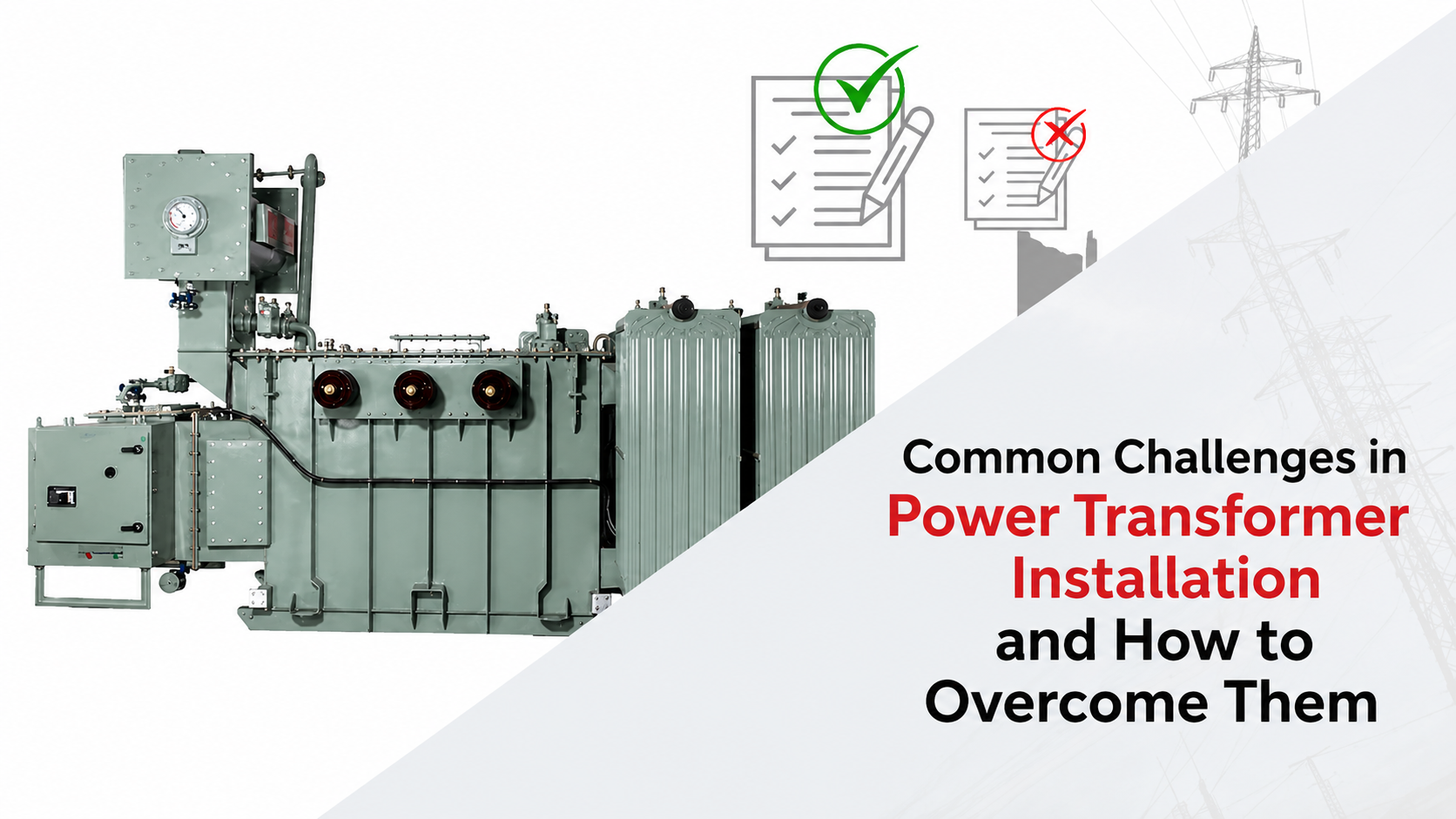
No matter how high-tech the transformer, it can perform poorly if not installed properly. It is crucial to have quality site preparation, handling, grounding, and consideration of the environmental problems, as this could lead to low efficiencies, unplanned outages, and increased maintenance costs.
In this article, the authors highlight the primary problems faced in power transformer erection and suggest some economic measures to resolve these issues.
For any organization, a power transformer may be a large investment. In addition to the purchase price, the users have to pay for the installation, commissioning, long-term maintenance, and operation of the equipment.
A good installation has benefits:
Working with an experienced manufacturer like Esennar will enable the company to address the challenges of transformer installation through its technical expertise, quality engineering, and support.
One of the biggest mistakes in transformer installation is the poor examination of the site.
Most projects overlook that it is necessary to look into factors such as:
Transformer placement should be chosen so that it is not at risk of creating ventilation obstructions, is easily accessible during maintenance work, or will not be exposed to a hazardous environment.
How to avoid it
An effective method to eliminate this mistake would be performing a thorough examination of the site before installation. This process should comprise:
Seeking the expertise of individuals with knowledge in the transformer industry or consulting an engineer while in the design stage can help to uncover possible challenges during design that may require difficult and costly alterations when the design is complete.
Power transformers are heavy, bulky, high-value electrical assets that are also highly sensitive. These assets may get damaged during transportation and unloading if equipment like bushings, radiators, cooling arrangements, insulation structure, etc. are not handled in the proper way.
Potential damage to the transformer could occur from incorrect lifting techniques, impacts, or rough handling before energising.
How to Overcome It
If you are involved with the transportation of a transformer, mitigate some of the potential risks associated by:
The foundation for the transformer is the main structural component, which provides support for the entire unit under the different mechanical loads it may experience during its operation.
A poorly designed foundation can lead to:
In a serious instance, a foundation defect may influence the alignment and cooling of the transformer.
How to Overcome It
The foundation needs to be designed in accordance with:
Concrete foundations are often used due to their strength and load-carrying capacity. An experienced civil engineer is ideal for large transformer installations.
Earthing is the most important factor when installing a transformer. Improper earthing could lead to more electrical faults, damaging the equipment and raising safety concerns.
An ineffective grounding system may result in:
How to Overcome It
Design a suitable earthing system according to the current applicable electrical regulations.
A properly designed earthing system can include the following:
A properly designed earthing system can ensure the protection of the equipment and the security of the operator.
Conditions of the environment are an important consideration that should not be disregarded in any design or purchasing considerations.
Common environmental challenges include:
This might also cause damage to the insulation and decrease efficiency.
How to Overcome It
Select the correct transformer options for the environment.
Additional protective measures may include:
The assessment needs to happen at the design and installation stages so that there is long-term success.
One of the frequent causes of transformer failures is due to wrong electrical wiring.
The most common problems encountered here are:
These lead to hot spots, imbalanced voltages, and wasted electricity.
How to Overcome It
All cable installation should only be performed by a qualified electrician. The main points recommended:
Tests should be completed before commissioning to discover errors beforehand and eliminate problems that arise after energisation.
The operation of a power transformer produces heat. Insufficient cooling and ventilation lead to operating temperatures that are higher than the rated values. This affects transformer efficiency and lifespan. Problems with indoor transformer installations often stem from poor airflow.
How to Overcome It
Ensure proper ventilation around the transformer installation site. A minimum amount of space should be left around the transformer to permit good ventilation. Some of the things to consider are minimum clearances, ventilation system design, heat dissipation calculations, and temperature monitoring systems. It is usually best to adhere to the manufacturer's minimum clearances in the installation instructions so that good cooling can be assured.
Inadequate pre-commissioning testing is often a major cause of premature transformer failure. Defects that cannot usually be detected and measured under rated operating conditions will pass by undetected until post-energisation.
How to Overcome It
The correct commissioning should encompass the following tests:
A good commissioning should prove everything is working before transformer commissioning.
Electrical installations must conform to regulations issued in Europe or the UK. Non-compliance could lead to delays in a project, inspection failure, additional costs, and safety implications.
How to Overcome It
Partner with manufacturers who produce transformers to a specification with accepted standards and quality assurance systems.
Documentation should include:
Working with a reliable manufacturer makes compliance easier and lowers the risk in your project.
The mounting trouble can be much more manageable with an expert transformer manufacturer.
A trusted partner provides:
Esennar is familiar with transformer installation issues and collaborates intensively with customers to realize 100% optimization of their power installations and 100% reliability of the transformer operation.
Power transformer commissioning is a sophisticated task and involves challenges of site, transportation, grounding, weather, and commissioning, among others, which can hinder the ground performance of a power transformer if not properly identified.
Related Link: UNDERSTANDING ISI/STANDARDS COMPLIANCE WHEN CHOOSING A MANUFACTURER
 Chat with Us