



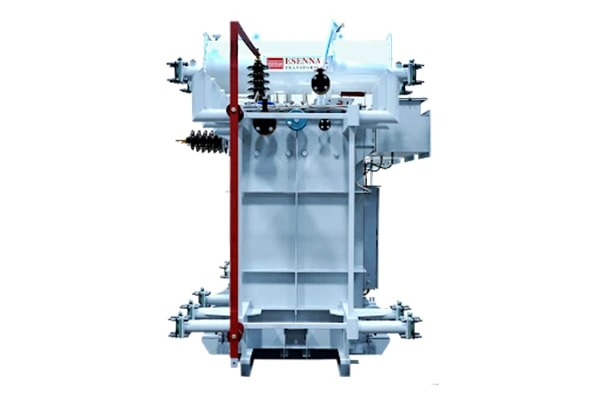
Inverter duty transformers in modern solar power plants and renewable energy systems work in challenging environments. Contrary to the traditional transformer, which is used with linear loads, inverter duty transformers are exposed to high-frequency switching, harmonic distortion, voltage spikes and short-term overvoltage. In these cases, there is a single important design and installation component that is absolutely necessary: shielding earth.
Poor shielding and grounding in several instances resulted in insulation stress, nuisance tripping, communication interference and even early breakdown of transformers. Shielding earth is not an accessory, a protective measure but a necessity of system stability and longevity of equipment.
We should know the electrical behavior of inverter systems in order to understand why it is necessary to shield the Earth.
Solar inverters are used to convert the DC power produced by photovoltaic panels to AC power by high-frequency switching devices, like IGBTs. The result of this switching process is high dv/dt (fast voltage rise times), common-mode voltages, and electromagnetic interference (EMI).
These high-frequency parts may couple capacitively between windings, and capacitively between windings and transformer core and tank. Otherwise, this capacitance coupling may lead to circulating currents, undesirable voltage accumulation, and propagation of electrical noise.
With traditional power transformers, linked to smooth sinusoidal sources, these problems are minor. In inverter duty transformers, however, such high-frequency stresses render shielding and good earthing essential.
Electrostatic shields are frequently used in inverter duty transformers between the windings of the primary and the secondary. This shield is normally a copper or aluminum layer that is attached to the earth. Its main use is to block capacitive currents arising due to high frequency switching.
When large dv/dt pulses are produced by the inverter, some of this energy tries to be transferred between windings via capacitive coupling. The unwanted energy is then drawn into the electrostatic shield, and channeled in a harmless manner to earth before it can cause any additional propagation.
In the absence of this shielding connection to ground, the voltage spikes can be transferred to the secondary side, and sensitive grid equipment and protection systems are impacted.
Shielding earth gives high-frequency noise and leakage currents a low-impedance path. It equalizes the voltage potential between windings and eliminates floating voltages that could otherwise cause insulation stress.
Common-mode voltage may result in circulating currents in the transformer core and tank in inverter-based solar plants. When these currents are not correctly earthed, they can result in:
These stray currents are safely led to earth by grounding the shielding layer, a good practice that results in stable transformer operation.
Very steep voltage waveforms are due to inverter switching. The sudden increase and decrease of the voltage lead to intermittent stress on the insulation of the transformer. With time, the insulation strength may be compromised due to the repeated exposure to such stress.
A shielding system that is well-grounded captures transients at high frequencies and does not allow them to place a strain on secondary windings. This greatly improves the life of insulation and minimizes the risk of partial discharges.
At a 12 MW solar project, the shielding on earth termination was incorrect and led to frequent inverter ground fault alarms. With the shield earthing restored with low resistance grounding, the alarms went away and the systems became stable.
Solar plants are equipped with large-scale communication networks to monitor and SCADA integration and protection systems. Inverters produce noise at very high frequencies that may disrupt communication cables unless carefully enclosed.
Shielding earth helps to minimize the electromagnetic interference through a controlled discharge of noise currents. This guarantees proper data transmission and proper monitoring of the performance of the plants.
In the absence of efficient shielding of the earth, there might be sporadic communication problems or lack of control in plants.
Another reason that is important to shield the earth is safety. The leakage currents may be at high frequencies and can cause the potential of the transformer tank or structural parts to rise unless they are grounded.
Earthing and proper shielding is used to make sure that the exposed conductive parts are at earth potential, and to minimize the chances of electric shock. It also undertakes adherence to electrical safety and grid codes.
Practically speaking, it is highly advised that the shielding earth should be interred independently and firmly connected to the plant grounding grid and that this should be checked regularly to ensure that the earth resistance is minimal.
The effects of inverter-based generation on electrical infrastructure are becoming more widely acknowledged by modern grid codes and standards of transformer design. Numerous specifications today suggest or require electrostatic shielding on inverter duty transformers. The correct earthing of the shield will guarantee the adherence to such standards and enhance the overall compatibility of the grid in general.
Cumulative high-frequency effects can be large in large solar parks with many inverter blocks running at the same time. Shielding earth is used to avoid the noise propagation throughout the system and stabilize the whole electrical network.
The solar transformer has a lifespan of about 25 years. Repeat exposure to high-frequency stress without shielding may shorten the life of insulation drastically.
Shielding earth is used as a protective barrier which absorbs undesired energy before it causes internal components to be destroyed. It inhibits internal biased discharges, decreases dielectric stress and increases mechanical stability.
Transformer performance has not changed even decades of active operation in harsh environmental conditions in the projects where shielding was designed and earthed appropriately at the outset.
During the installation of inverter duty transformers it is necessary to make sure that:
Inappropriate termination or slack connections may nullify the whole effect of shielding.
Inverter duty transformers should be shielded as solar inverters produce high-frequency switching noise, harmonics, and transient voltages that may place transformer insulation under stress and can cause system instability. The electrostatic shield with proper grounding captures these undesired currents and completely diverts them to earth in a safe manner.
It ensures insulation, minimizes electromagnetic interference, improves safety, grid compliance, and extends the transformer life. Shielding earth is not a choice in modern applications of solar, but rather a requirement.
Related Link: WHAT COOLING METHOD IS BEST FOR SOLAR TRANSFORMERS?
 Chat with Us