



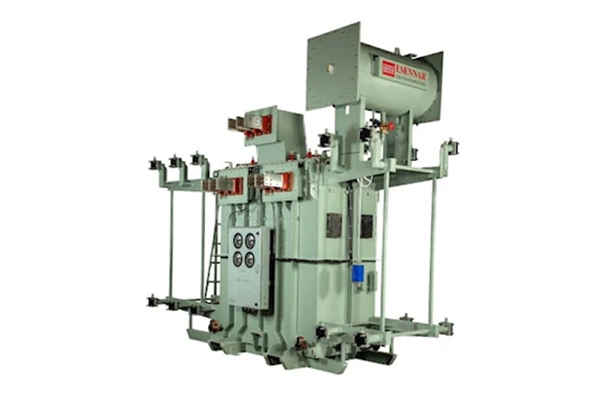
Transformers in solar power plants have to work under one of the most problematic electrical and environmental conditions. They bear constant load, especially during bright days and experience high ambient temperatures and are exposed to inverter-induced harmonics. In this harsh environment, cooling of a transformer is one of the crucial aspects that determine the reliability and service life.
It has been noted that the choice of cooling system can be what makes or breaks a transformer, making it run efficiently over 25 years or displaying signs of thermal stress in a couple of summers. The optimal cooling system of solar transformers varies depending on the size of the plant, site and the environment of installation; however, in the majority of utility-scale solar plants that are located outdoors, ONAN oil-cooled transformers are deemed the most reliable and the most preferred choice.
The solar plants produce the greatest power during the midday, which is the hottest day of the day. In Telangana, Rajasthan, Gujarat, the ambient temperature can be up to 48C to 50C, so the rating of transformers is usually 40C ambient. In hotter places of operation, the increase in internal temperature becomes high.
Also, switching at high frequencies in solar inverters adds harmonics. Harmonics lead to extra copper losses and stray flux heating of transformer windings and core. This additional heat (without an effective cooling system) speeds up the insulation degradation process and decreases the lifetime of transformers.
Most widely used are oil-cooled and dry-type transformer cooling systems.
In oil-cooled transformers, insulating oil is used to conduct the heat out of windings to the outer tank surface, where it is cooled in the air. Oil-free heat management in dry-type transformers is done through air circulation and using windings encapsulated in resin. The most popular cooling systems in oil-cooled systems are ONAN and ONAF.
ONAN is the abbreviation of Oil Natural Air Natural. This system has a natural convection of oil and the heat is discharged through natural airflow over radiators.
ONAF is an acronym, which means Oil Natural Air Forced. It has extra cooling fans which increase the amount of heat dissipation as the load increases. Air Natural (AN) or Air Forced (AF) is commonly used as a cooling mechanism in dry-type transformers.
ONAN oil-cooled transformers are usually the choice in most outdoor solar power plants particularly the utility-scale plants connected at 11kV or 33kV. The reason behind this inclination is reliability, simplicity and cost-effectiveness.
ONAN transformers do not use outside fans or moving parts. No forced cooling system helps minimize maintenance needs and removes the possibility of mechanical failures. This reliability is of great importance in remote solar farms where access to maintenance may not be available.
Oil has greater heat transfer ability than air. It has a high heat absorption of windings and is able to dissipate evenly. This guarantees improved temperature control with inverter harmonic loading conditions.
Well-designed ONAN transformers work very well in a solar environment when chosen with the correct MVA margin and temperature class insulation.
ONAF cooling can be suggested in larger capacity solar pooling substations, where transformer ratings are more than 10 MVA or space is a constraint to radiate size.
ONAF cooling has forced air fans which are switched on as the load/temperature rises. This will enable the transformer to be used at more loads without overheating.
Forced cooling systems add more elements like fans, temperature sensors, and control circuits. These elements need to be serviced on a regular basis. Fan maintenance is of special concern in dusty solar farms.
One 25 MW solar project had ONAF cooling applied on a 31.5 MVA transformer because of high load density and limited space. It has performed well with good maintenance planning. However, ONAN is the easier and more reliable option for smaller plants.
Dry-type cast resin transformers are typically applied in rooftop solar systems or indoor substations with fire protection rules being very strict. They eliminate the chances of oil spill and decrease the fire risks.
Transformers that are of the dry type have lower overload capacity than those that are oil cooled. They rely solely on the air flow to cool them down, and are therefore not as applicable in warm outdoor conditions. Dry-type transformers can have increased thermal stress in high-temperature outdoor solar farms than the oil-filled ONAN units. Hence, they are generally suggested to use in indoor or commercial rooftop solar installation and not in large utility scale projects.
The ambient temperature is a significant factor in cooling selection. When the project location constantly surpasses 45C, derating or increased capacity should be considered in the design of transformers.
Onan transformers which are oil-cooled are more effective in managing the changes in ambient temperatures since the oil flow evenly distributes the heat. Also, higher temperature class insulation selection and adequate design margin can be used to make sure of good performance at peak summer.
Based on field experience, ambient temperature had not been considered in selecting the transformers, and it was not uncommon to find that early insulation aging occurred. Adequate cooling choice can greatly prolong service.
Direct impact of cooling on transformer life. Each increase of 6 or 8 o C above the rated temperature may cause a life-span of insulation to be approximately half. This renders cooling efficiency as one of the key considerations in attaining 25-year performance of plants.
Under a single solar project at Maharashtra, a small-sized cooling system resulted in frequent high-temperature alarms in the summer afternoons. Stabilization of temperature and reliability of operation became much better after upgrading to a transformer with a better radiator surface area and ONAN design.
Though ONAF systems are designed to have better cooling capacity, they are more expensive to install and maintain. Dry-type transformers do not need any oil processing, but tend to be more expensive at high capacities and may not work best in severe outdoors environments. ONAN cooling offers an optimal balance of cost, reliability and performance to the majority of outdoor solar applications. It is mechanically easy, thermally efficient and tested in thousands of installations.
Depending on the size of the plant and the location of the installation, the most effective cooling method of solar transformers varies, but in the majority of outdoor utility-scale solar installations ONAN oil-cooled transformers are the most popular choice. They provide efficient heat dissipation, low maintenance, high overload capacity and extended life cycle.
When the pooling substations require additional thermal support, the ONAF cooling can be used in higher capacity substations. Indoor or rooftop (dry-type) solar system transformers are more appropriate in situations where fire safety is a consideration.
Related Link: WHY SHIELDING EARTH IS REQUIRED FOR INVERTER DUTY TRANSFORMERS?
 Chat with Us