



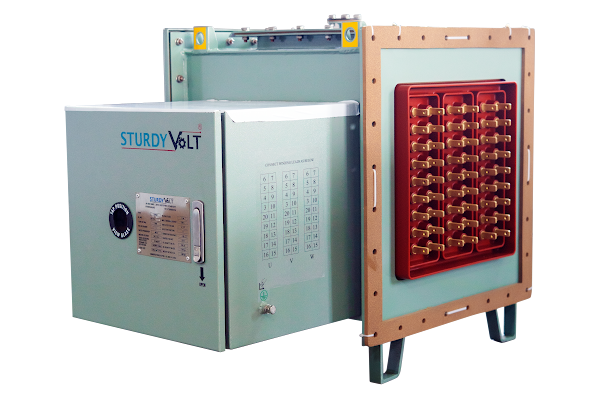
The PM-KUSUM (Pradhan Mantri Kisan Urja Suraksha evam Utthaan Mahabhiyan) initiative in India has a grand objective of transforming the farming sector energy, by solarising farms to supply less electricity through the grid. An important aspect of a successful implementation of this scheme especially with the decentralised 11kV solar plants is the On-Load Tap Changer (OLTC) version of distribution transformer. Although ignored, the Transformer OLTC is not just an accessory but a vital element of technology that determines the viability of the project, stability of the grid, and financial sustainability of the project in the long term.
The main role of the 11kV solar plant under PM-KUSUM is to feed solar-generated electricity to the local agricultural feeder to supply the irrigation pumps. Typical plant capacity ranges from 500 kW to 10 MW. Nevertheless, the rural distribution network, in which the plant is integrated, is inherently vulnerable to constant variations in voltage. These changes are due to.
These daily and seasonal changes in voltage cannot be met by a standard transformer which has fixed settings of a tap. In this case, the Tansformer OLTC comes in handy.
An Transformer OLTC is an advanced equipment that is installed in a transformer and will provide the opportunity to modify the voltage ratio without disconnection of the transformer to the grid. It automatically controls the output voltage by switching taps on the winding based on actual grid conditions in real time.
Working with typical + -10 percent variation and 1.25 percent step resolution, the Transformer OLTC automatically increases or decreases the HV tap as the real-time conditions change: during bright daytime it increases the LV voltage by decreasing HV tap, and during evening or in the low-voltage cloudy conditions it decreases the LV voltage by increasing the HV tap, to avoid inverter trip-outs.
While an OLTC transformer carries a higher upfront cost, it is a strategic investment with a compelling return.
In the case of DISCOMs, the extensive use of Transformer OLTCs in PM-KUSUM plants is also profitable because it decentralises the management of voltages, minimises technical losses, and enhances the quality of supply in all rural customers.
Fundamental Characteristics of Insulating Oils:
| Parameter | OLTC | Off-Circuit Tap Changer |
| Tap change under load | Yes | No |
| Power interruption required | No | Yes |
| Suitability for solar | Highly suitable | Not suitable |
| Response to voltage fluctuations | Automatic & continuous | None |
| Handles reverse power flow | Yes | No |
| Inverter tripping prevention | Effective | Ineffective |
| Impact on CUF & PR | Improves | Degrades |
| Maintenance & operation | Low & controlled | Manual & disruptive |
| Recommended for PM-KUSUM | Yes | No |
An OLTC is not a luxury in the context of the PM-KUSUM scheme, but a project enabler. It makes a basic solar generator grid-supportive, revenue-maximising, and compliant. The Transformer OLTC guarantees that financial benefits of farmers and developers are preserved, the project technical feasibility is maintained, and the national interests of grid stability and energy security by providing dynamic control of the ongoing voltage issues of the Indian rural network. One of the key conditions of the successful and sustainable implementation of 11kV-decentralised solar plants within PM-KUSUM is, therefore, specification and investment into OLTC-equipped transformers.
Related Link: Future of Solar Inverter Transformers in Sustainable Energy
 Chat with Us