



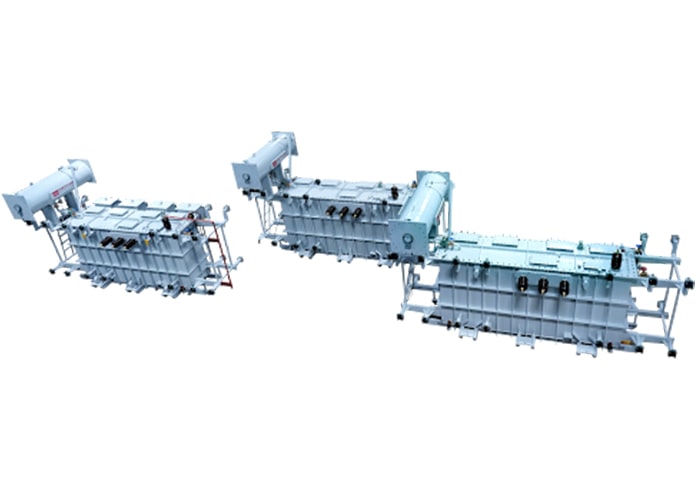
With the global momentum building up towards clean energy, solar energy has become one of the major movers towards a sustainable energy production of electricity. Grid-tied solar power system wherein the electricity generated by the sun through solar power is fed directly into the utility grid, are particularly popular owing to their efficiency and scalability. Another very important component in these systems that must have been ignored is the inverter duty transformer. These transformers are of a special nature and are mainly important to guarantee effective energy transfer, protection of systems and compliance with the grid.
A typical grid-tied solar system consists of photovoltaic (PV) panels, inverters, and connection equipment to the utility grid. The PV panels' direct current (DC) electricity must be converted to alternating current (AC) in order to be grid-compatible. However, before the electricity can be fed into the grid at the appropriate voltage and with adequate isolation, it passes through an inverter duty transformer.
Special developed transformers, known as inverter duty transformers are designed to deal with the unusual output of solar inverters. Inverter duty transformers, as opposed to conventional transformers in conventional power systems, are made to manage high frequency switching transients, harmonic distortions, voltage fluctuations, and rapid rise time pulses. These dynamics are due to the switching character of modern electronic power inverters, particular in the case of the solar application. Unless transformer design done well, such factors may cause deterioration of equipment, shortening of life of systems and power quality.
Voltage Transformation: Stepping up or down of voltage will be considered to be among the main functions of any transformer. Transformers In inverter duty In solar systems, inverter duty transformers typically increase the output voltage of an inverter to the medium voltage that is needed to connect it to a grid.
Electrical Isolation: Transformers Inverter duty transformers can isolate the inverter galvanically in respect to the utility grid. This is essential in terms of safety since there will be no fault currents and the possible surge of flow could have back into the PV system, and this will safeguard both equipment and people.
Handling Harmonics and Transients: PV inverters attach to solar cells giving high frequency switching and thus can induce current harmonics and voltage oscillations. The Inverter duty transformers absorb these electrical strains and treat them, being made of low loss magnetic cores, of high dielectric strength insulation and of specially wound conductors.
Improved Efficiency and Reliability: Reliability and thermal performance are important because solar installations tend to run at full capacity during the day. Specifically, inverter duty transformers are constructed using improved cooling means (natural air, forced air and oil cooling) and materials that exhibit extended lifetime due to high temperature cycling (potentiated and sustained efficiency).
Compliance with Grid Standards: Utility grids have strict requirements for voltage, frequency, and harmonic distortion. Inverter duty transformers help meet these standards by smoothing out irregularities in the inverter's output and providing a stable interface for grid connection.
Design Considerations: Designing an inverter duty transformer involves accounting for high-frequency components, minimising stray capacitance, ensuring thermal stability, and selecting materials resistant to partial discharge and dielectric breakdown. The design is also dependent on such factors as location (in or outside), cooling method and the environmental conditions (humidity, dust, temperature).
The key role of inverter duty transformers in a grid-tied solar power system is to achieve efficient, safe and stable interconnection of the renewable energy. These specialised transformers will only be more significant as the use of solar power continues to expand as the years progress. Inverter duty transformers must be well chosen, designed and maintained to ensure better performance and lifespan of solar energy systems, and thus enhancing a cleaner and more resistant power grid.
Related Link: HOW TO SELECT THE RIGHT INVERTER DUTY TRANSFORMER FOR YOUR SOLAR PROJECT
 Chat with Us