



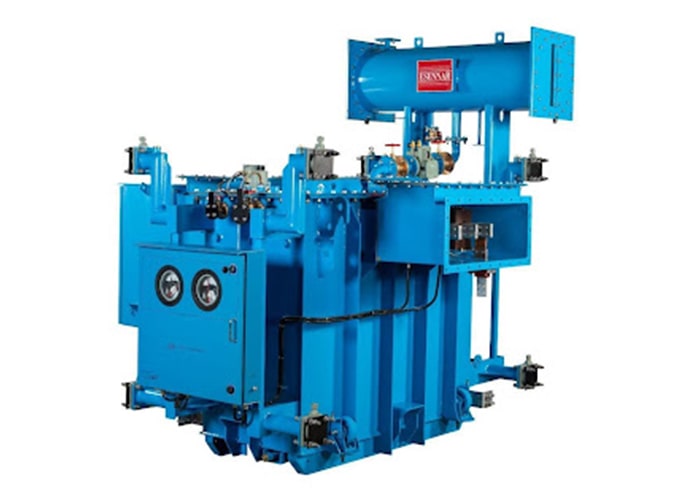
Most of the time, oil-filled or dry-type distribution transformers are the main choices when you need one for a building, workplace, or neighborhood. There is no single "best" option that wins in every situation. The right choice depends entirely on your specific needs for safety, location, cost, and maintenance. Think of it like choosing between a truck and a sedan; one isn't universally better—it depends on what you need to do.
Here’s a simple breakdown of the key differences to help you understand which might be better for your project:
Oil-Filled Transformers: These are built with a core and coils submerged in a special insulating oil. This oil does two critical jobs: it acts as a powerful electrical insulator and, more importantly, it absorbs heat from the coils and efficiently dissipated into the air. Oil is a very effective coolant.
Dry-Type Transformers: These transformers use only air to cool the system. The coils are either vacuum pressure impregnated with a special resin (VPI) or completely cast in a solid epoxy resin. The air around the transformer usually drives the heat away, and at times, fans are added to enhance the cooling effect.
Oil-Filled: The oil that is used to insulate is inflammable. Modern oils are not as flammable, and some are even biodegradable, but leakage can always occur, or in a critical failure, there can always be a fire. This is why they tend to have more safety equipment such as containment walls (bunds) to trap any leaked oil, particularly when located indoors.
Dry-Type: These are undoubtedly much safer to use indoors. Because they use no liquid, there is no risk of oil leaks, spills, or fires originating from the oil. This makes them the preferred and often mandatory choice for inside hospitals, high-rise buildings, schools, shopping malls, and factories where fire safety is a top priority.
Oil-Filled: Their higher power density and need for spill containment make them ideal for outdoor applications. You see them on utility poles and in fenced-off substations in neighbourhoods. Installing one indoors is possible, but it adds significant cost and complexity due to safety regulations.
Dry-Type: These are the champions of indoor installation. Their small, compact and non-flammable design can be installed directly into an electrical room, near the load they are serving. This minimises wastage of energy in the cables between the transformer and the building.
Oil-Filled: Generally, oil-filled transformers are more efficient, especially at higher voltages and larger sizes. The oil's superior cooling properties allow it to handle overloads better than dry types.
Dry-Type: While modern dry-types are very efficient, they can be slightly less efficient than an equivalent oil-filled unit. Their overload capability is more limited because they can't dissipate heat as quickly.
Oil-Filled: They will demand additional maintenance. Regular tests should be done on the oil's quality and wetness level, and the tank should be checked for leaks. But when maintained, they have very long service life, sometimes more than 30 years.
Dry-Type: Maintenance is simple. They essentially require just periodic visual inspections and cleaning to ensure dust isn't blocking airflow. Their solid resin or VPI coating protects the coils from moisture and corrosive environments, leading to a very robust, low-maintenance design.
Oil-Filled: The initial purchase price for the transformer itself is often lower than that of a dry-type transformer of the same rating.
Dry-Type: The initial unit cost is typically higher. However, for indoor applications, the total installed cost is often lower because you avoid the expense of building concrete containment pits, fire suppression systems, and complex ventilation.
The answer is clear once you know the priorities of your project.
Choose an Oil-Filled Transformer if: Your application is outdoors, you need the lowest initial cost for a high-power unit, you require high overload capability, and you have the space and budget for potential containment and maintenance.
Choose a Dry-Type Transformer if: Your application is indoors (especially in public or critical buildings), fire safety is your top concern, you want minimal maintenance, and you prefer a simpler installation closer to your electrical load.
In short, for outdoor, utility-scale power distribution, oil-filled is often the workhorse. Dry type is without a doubt the best way to get safe, stable power in the places where we live and work.
Related Link: POWER TRANSFORMER MAINTENANCE TIPS TO IMPROVE PERFORMANCE
 Chat with Us