



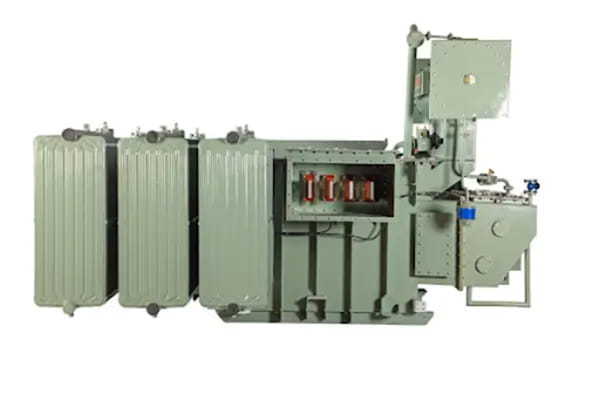
Transformer oil has proven to be very important in the thermal performance, efficiency and safe loading capacity of power and distribution transformers. In addition to the insulating medium, transformer oil also has a direct effect on the heat dissipation, temperature increase and response to the transformer to changing loads. The knowledge of the effects of transformer oils on the temperature increase and loading performance is necessary to guarantee a long service life, reliability, and safety of operation.
When working with transformers, heat is produced out of the electrical losses and it should be able to be cooled so that the transformer is not overheated. Transformer oil is the major cooling medium that absorbs and removes this heat out of windings and core.
Transformer oil has important thermal functions which include:
The effective circulation of oil as a medium of heat transfers is a basic principle towards regulating temperature increase during normal and overload conditions.
Temperature rise refers to the increase in transformer operating temperature above ambient conditions. Excessive temperature rise can severely impact performance and lifespan.
High temperature increase has the following effects:
The quality of transformer oils and thermal characteristics will directly determine the ability to regulate the temperature increase during operation.
Transformer oil has several physical and chemical properties which define its cooling efficiency:
Transformer loading performance is the capacity of a transformer to operate with its assigned rating or temporary overloads without reaching unsafe levels of temperature.
Transformer oil has a direct influence on loading capacity by:
Oil of good quality also increases the thermal margin thus transformers are able to safely operate under higher loads.
The level of heat production becomes high during overload conditions. Transformer oil should react fast to avoid high temperatures.
Good oil thermal performance gives:
Oil of poor quality, or old oil, may restrict the overload capacity, and the transformer must be derated.
Transformer oil loses its cooling and insulating qualities as it becomes older, thus impacting negatively on the control of temperature rise.
Most of the problems associated with ageing are:
Constant oil testing and frequent replacement and regeneration should be conducted to ensure an optimal performance of loading.
The various types of transformer oil have varying thermal properties that directly affect the temperature increase and loading behaviour.
The most popular and economical choice is mineral transformer oil, which has good thermal conductivity and low viscosity which allows it to dissipate heat effectively, but must be monitored periodically to check oxidation and moisture.
Natural ester oils are safer to the fire, are more environmentally friendly and, although they have a higher viscosity, have higher heat capacity which enables them to withstand higher temperatures of operation.
Synthetic ester oils provide the best thermal stability and they are suited in high-load and high-temperature applications, though at a greater cost. The choice of the right type of oil is thus vital in enhancing cooling efficiency of transformers and the general loading performance.
There is a close correlation between insulation ageing and temperature rise. Each 6-8 degree above design limit may result in a 50 percent loss in insulation life. The good transformer oil helps in:
Fundamental Characteristics of Insulating Oils:
| Characteristics | Mineral Oil (Oil-1) | Natural Ester Oil (Oil-2) | High-Performance Bio-Based Oil (Oil-3) |
|---|---|---|---|
| Origin | Non-biodegradable | Bio-degradable | Bio-degradable |
|
Viscosity at 40°C (mm²/s) |
13.2 | 34.59 | 3.737 |
|
Density at 20°C (g/ml) |
0.8190 | 0.9212 | 0.7837 |
| Flash Point (°C) | 156 | 354 | 146 |
Temperature Rise Under 100% Continuous Load
| Parameter | Mineral Oil | High-Viscosity Bio-Oil | Low-Viscosity Bio-Oil |
|---|---|---|---|
| Oil Temp Rise (°C) | 38.0 | 39.1 | 37.0 |
| HV Wdg Temp Rise (°C) | 40.5 | 41.2 | 39.1 |
| LV Wdg Temp Rise (°C) | 41.1 | 46.1 | 38.1 |
| HV Wdg Gradient | 12.0 | 14.3 | 11.2 |
| LV Wdg Gradient | 11.8 | 18.9 | 10.1 |
Temperature Rise Under Variable Solar Load
| Parameter | Mineral Oil | High-Viscosity Bio-Oil | Low-Viscosity Bio-Oil |
|---|---|---|---|
| Oil Temp Rise (°C) | 33.6 | 35.6 | 34.0 |
| HV Wdg Temp Rise (°C) | 39.1 | 40.6 | 39.5 |
| LV Wdg Temp Rise (°C) | 42.6 | 48.1 | 40.8 |
| HV Wdg Gradient | 14.3 | 16.1 | 14.0 |
| LV Wdg Gradient | 17.9 | 23.0 | 15.3 |
Transformer oil is a decisive element to monitor temperature increment and safe loading performance. The thermal properties, circulation behaviour and long-term stability of it have direct influence on the heat dissipation, the life of insulation and the reliability of its operation.
The proper choice of transformer oil type and its quality maintenance using periodic testing and maintenance will allow the operators to increase the loading capacity of transformers, minimise the temperature increase, and increase equipment life greatly. In contemporary power networks where load variations are frequent, quality transformer oil is not only an auxiliary product but also a major facilitator to effective and dependable transformer performance.
Related Link: Oil-Filled Vs Dry-Type Distribution Transformers: Which is Better
 Chat with Us