



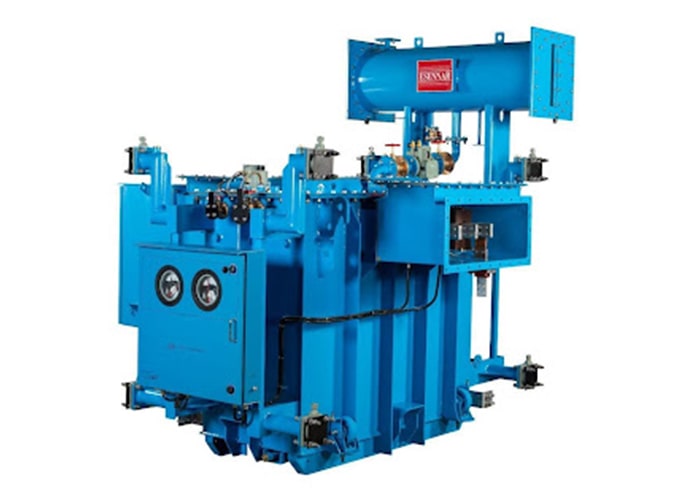
The distribution transformer is a 100-year-old workhorse of the electrical grid that has traditionally been driven to pass only in one direction. It has had only a limited number of functions, but they have been vital, namely, to reduce high distribution voltages to the lower levels appropriate to homes and businesses.
Still, the relatively straightforward distribution switch is about to go through a major shift as towns become smart, data-driven communities. It will no longer be an inactive node in the network in the smart city of the future. Instead, it will be an active, smart, and responsive node at the center of a strong, dynamic energy network.
The greatest change will be the passive hardware to an intelligent grid asset transformation. The distribution transformers of the future will be fitted with a set of sensors that will constantly watch a bounty of information in real-time. Not only will these sensors keep an eye on fundamentals like voltage, current, and oil temperature, but they will also keep an eye on less obvious things like the amount of dissolved gases, partial discharges, and mechanical stress. This makes it easier to switch from last-minute correction to maintenance that is based on predictions and conditions.
The utilities will get exact alerts about impending problems like insulation wear or winding flaws, so they can fix them before they cause a major breakdown. This cuts down on power blackouts, keeps people safe, keeps upkeep costs low, and makes the generator last as long as possible.
The biggest change will be the transition of passive hardware to an intelligent grid asset. The suite of sensors installed in future distribution transformers will keep track of an abundance of data in real-time. These sensors will not only monitor simple parameters like voltage, current and oil temperature, but also less obvious parameters such as analysis of dissolved gases, partial discharges, and mechanical stress. This stream of data will be analysed at the local level or sent to cloud analytical services through secure communication channels. This facilitates the replacement of time-based or run-to-failure maintenance to predictive and condition-based maintenance. The utilities will get accurate warnings on imminent causes like, insulation deterioration or winding defects, and the repair can be done to prevent a disastrous breakdown. This reduces the outages, maximises the safety of the population, minimises the costs of maintenance, and maximises the life of the transformer.
Electric vehicles (EVs), too, are gaining popularity and that is a massive challenge. A normal generator can easily be overloaded under the condition of high number of EVs charging simultaneously with fluctuating demand. This is more so when the technology of fast-charging is utilised. A smart system of charging electric cars in the future will include the smart generator. It can also monitor the local load, as well as converse with the charging locations or a platform provider to manage loads as they occur.
Among other things, this could mean controlling charging rates or delaying less important charging until peak demand, so as not to overload the transformers and interfere with EV users' needs. Therefore, the transformer is not a possible bottleneck, but rather a part of managing the variable demand.
The idea of the digital twin will also play a role in the future distribution transformer. The existence of a virtual copy of the physical object fed by its real-time sensor data will enable the utilities to simulate and predict its behaviour in different future conditions, such as a heatwave where EV charging is high. This facilitates upstream grid planning and optimisation.
Since a lot of data is being produced, the grid requires high levels of security that is safe to ensure that data is not compromised. Finally, utilities will also have to acquire new skills and acquire sophisticated analytics tools to make sense of the data and act upon the insights which these smart assets will show.
To sum up, the future of the distribution transformers in the smart cities can be seen as a radically reinvented future. They will not be silent, electro-mechanical workhorses but will be more like data-filled, communicative intelligence centres. These advanced transformers will be the unsung heroes by facilitating predictive maintenance, two-way power flow of renewables, and mass adoption of EVs, which will guarantee the stability, productivity, and reliability of the sustainable smart grids on which our cities of the future will rely. Their effective implementation is not just upgrading, but a condition of the successful implementation of the smart city vision.
Related Link: COMMON POWER TRANSFORMER FAILURES AND MAINTENANCE SOLUTIONS
 Chat with Us