



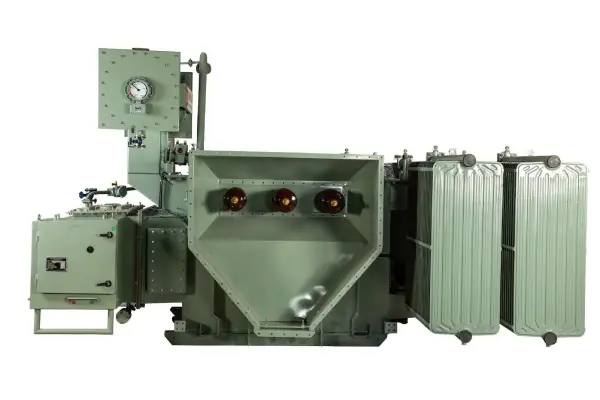
The power transformers are the quiet, but essential, workhorses of our contemporary electrical infrastructure. The high-capacity and highly efficient devices operate behind the scenes, and the important role they play is to transform voltage, which facilitates the efficient transmission, distribution and utilisation of electrical energy. The large, interconnected electrical grids that we use in our homes, industries and cities, would not be possible without them. They are not just used to change voltages, and this is their main contribution to the stable, reliable and efficient power system.
The main and the most critical use of the power transformer is based on the basic physics of electrical power. A large current will be emitted when conveying a given power over long distances causes large energy losses to the resistance of the transmission lines.
Step-up transformers are located at generating stations, near power plants. They enhance the voltage very highly to dramatic levels. With an increase in the voltage the current of the given power is cut off drastically. The secret of efficient long-distance transmission is this low-current, high-voltage arrangement which reduces resistive losses to a minimum and permits the transmission of power hundreds of miles between the place where it is generated and the place where it is required.
When the transmission lines of high voltage are close to the population centre, the electricity should be rendered safe to be used as commercial and residential electricity. This is the area of step-down transformers. These transformers are then connected in series all through the distribution network and brought to reduce the voltage in a systematic manner. To begin with, the voltage is scaled down to primary distribution level at the transmission substations.
This energy is then fed to smaller distribution substations or fed directly to pole mounted transformers often found in neighbourhoods. These are common cylindrical apparatuses which carry out the last conversion, reducing the voltage to the normal levels of utilisation within commercial and industrial establishments. This gradual and incremental process of reduction makes sure that the electricity coming to the end of our outlets is safe and usable at that voltage.
Contemporary, complicated electrical systems employ power transformers beyond voltage transformations. They are essential in linking grid segments with varying voltage. The interconnection enhances grid reliability and resilience. Transformers help to prevent blackouts by diversion of power in the event of failure of any power plant or transmission line. There are also enormous power transformers that ensure the stability of the grid. They have tap changers and by design, they control the voltage and may adapt to varying loads to ensure consumers receive voltage.
The current shift to a sustainable power system has provided a new twist to the purpose of power transformers. Such sources of renewable energy as offshore wind farms or vast solar arrays are usually situated in remote regions that are not close to the centres of urban loads. Such generation sites need step-up transformers to increase the generated medium voltage to the high voltages needed to be effectively integrated into the main transmission grid. On the other hand, transformers will be required at the point of connection to reduce the power to be distributed. They are thus the key facilitators of the green energy change, the crucial connection between the distributed renewable producers and centralised grid.
Between the time of generation of electricity and when it is used to operate an appliance in the house, it passes through multiple power transformers. They render the economical transmission of long distances, distribution within a locale to be safe, offers the capability to add flexibility to an effective and interconnected grid, and simplifies integrating renewable energy. With the increasing sophistication and decentralisation of grids, the role of the power transformer will keep on changing, although its role as the ubiquitous, essential base to the whole electrical system cannot be disputed. The reason why the lights keep on in our contemporary society is because of their reliability and efficiency.
Related Link: HOW TO CHOOSE THE RIGHT POWER TRANSFORMER FOR YOUR APPLICATION
 Chat with Us