



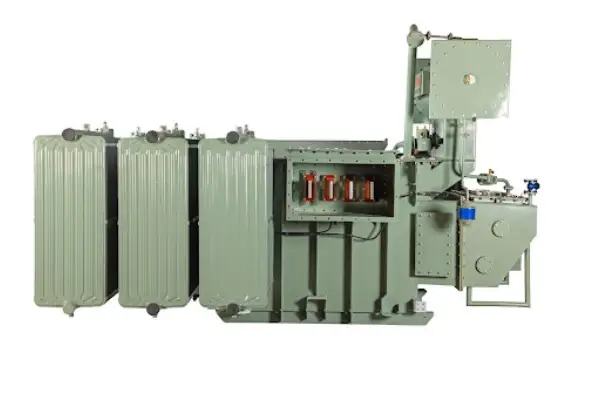
The choice of the power transformer is a very important decision that will affect the safety, efficiency and life of your electrical system. In the case of industrial machinery, a renewable energy project, or a consumer electronics power supply, the wrong choice may result in untimely failure, waste of energy, or may result in failure. To make a decision, it is necessary to navigate the most important specifications and application requirements.
The first step is to clearly define the transformer's purpose and the environment in which it will operate. This foundational information will guide all subsequent choices.
Application Type: Is it a power distribution, voltage isolation, machine tool control, a rectifier circuit or audio equipment transformer? There are special requirements to each application. As an example, an audio amplifier transformer needs to be able to cover a broad frequency range, whereas an arc welder transformer needs to be in a position to deliver high inrush currents.
Operating Environment: Will the transformer be installed indoors in a climate-controlled room, or outdoors exposed to rain and temperature extremes? Is the atmosphere corrosive, dusty, or potentially explosive? The environment dictates the required enclosure and cooling method. For harsh, wet, or dusty conditions, a totally enclosed, fan-cooled or hermetically sealed transformer is necessary. For clean, indoor settings, an open-ventilated model may suffice.
Once the application is defined, you must calculate the core electrical parameters.
Load Requirements (kVA or MVA): This is the most important specification. The power rating of the transformer should be capable of supplying the summation of the load it will supply. A 15-25% safety factor is also advisable to keep in case of future expansions and inrush currents. A transformer that is undersized will overheat and break, and one that is oversized will operate inefficiently at low load and be expensive to acquire in the first place.
Voltage Ratings: Exactly identify the input (primary) and output (secondary) voltages. Take into account the nominal voltages and the necessary tolerance. Consider the possible voltage drop in the supply cables especially when the transformer is distant either in the source or the load.
Frequency: The standard line frequency must match the transformer's design. In most regions, this is 50Hz or 60Hz. Using a 60Hz transformer on a 50Hz supply can cause excessive core heating.
Beyond the basic specifications, several performance and safety features require consideration.
Impedance: The impedance is an expression as a percentage, which limits the current that can flow in a short circuit and influences the regulation of voltages. The normal values range between 4-6%. A lower impedance gives superior voltage regulation at load but permits larger fault currents which may be detrimental. The appropriate impedance should be synchronised with the system protection scheme as a whole.
Insulation Class: This is indicated to determine the highest temperature that the insulation of the transformer can be subjected to without deteriorating. Insuring above an insulation level that is necessary, such as when in a hot environment, may greatly extend the service life of the transformer.
Connexions and Taps: The vast majority of power transformers are tapped, i.e. have extra connexion points on the winding that provide small changes in the voltage ratio. They are essential in offsetting changes in supply voltage. Be sure that the transformer has the proper primary to your system.
Sound Level: The audible hum of the transformer expressed in decibels (dB) can be a decisive factor in noise-sensitive environments such as offices, hospitals, or residential areas. Manufacturers have sound level rating of their products.
Lastly, consider the efficiency of the transformer as the percentage of the input power that is converted into load and the rest is wasted as heat. Even though the cost of acquiring high-efficiency transformers is higher, it uses less energy during its operational life. With a continuously running transformer, it becomes very easy to save on the cost of electricity, which in turn makes the Total Cost of Ownership (TCO) much less.
By systematically working through these categories, you can confidently select a power transformer that is reliable, safe, and perfectly suited to your specific needs, ensuring optimal performance for years to come.
Related Link: THE ROLE OF POWER TRANSFORMERS IN MODERN ELECTRICAL GRIDS
 Chat with Us