



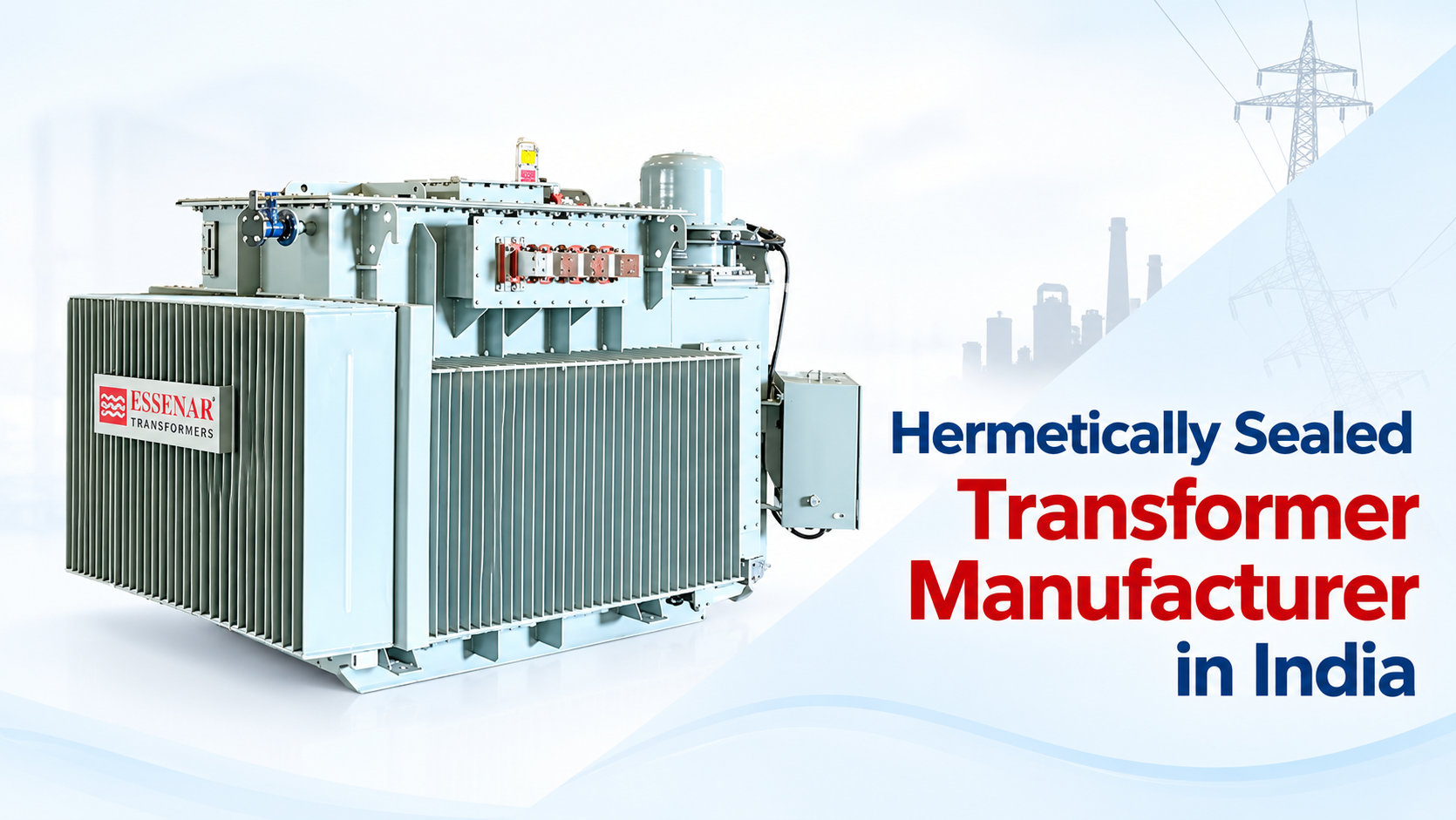
Electrical transformers are designed to offer reliable and maintenance-free operation within electrical distribution and industrial applications, which are called hermetically sealed transformers. The hermetically sealed transformer is entirely free of contact with air, in contrast to conventional oil-immersed transformers with a conservator tank and which allow the insulating oil to be in contact with air. This design provides protection for the transformer oil and components from moisture, dust and other external contamination.
With growing demand for reliable and high output power distribution equipment, it is very important to businesses and utility services to choose the most proven transformer manufacturer.
A hermetically sealed transformer is an oil-filled transformer in which the transformer tank is isolated from the atmosphere so that there is no direct contact between the insulating oil and the atmosphere. The volume of the oil changes with temperature changes, but this is allowed to occur by the flexibility or controlled expansion of the sealed system, instead of a conventional conservator.
A hermetically sealed transformer has a number of features which can help to provide reliable operation.
The completely sealed transformer tank is the main feature of the device. The transformer oil is better protected from external moisture and other contamination by limiting the contact with atmospheric air.
In case parts of the transformer is exposed to moisture, it can behave unreliably over time due to corrosion and exposure to other elements. When you use hermetically-sealed transformers, this challenge is reduced down to zero.
Transformer is generally not required to use a traditional conservator system, so some maintenance needs can be minimized. The closed system also helps to reduce the contamination of the insulating medium.
Hermetically sealed transformers can provide a relatively compact arrangement without the need for the same conservator arrangement as oil-immersed transformers. This can be beneficial where installation space is limited.
The insulating oil has a significant role in cooling and electrical insulation of transformers and therefore, the protection of transformer oil is important. Preventing contact with atmospheric air will reduce the risk of contamination and deterioration due to oxidation.
It is as crucial to choose the right manufacturer as it is to choose the right transformer specifications. Besides having the expertise, the manufacturer provides all the necessary service you will require over time to keep the device up and running properly.
It's important to clearly define the technical requirements before you buy a hermetically sealed transformer. If the ratings don't match the actual task, the overall performance of the entire system can be negatively impacted.
Transformer performance is directly affected by the quality of the materials used, and the manufacturing process. It is therefore important that buyers seek manufacturers who have proper quality-control measures during manufacturing.
Important components include the magnetic core, windings, insulation materials, transformer oil, tank, bushings, and other accessories.
A quality-oriented manufacturer must do inspection at various stages of manufacture, and not only at the end.
Testing is an integral part of the manufacture of transformers. It is useful for determining if the completed transformer satisfies the electrical and mechanical specifications.
Design and manufacture a transformer to meet the standards and specifications for the intended use. Before comparing manufacturers, enquire about compliance with the relevant Indian Standards (IS) and, if available, International Electrotechnical Commission (IEC) standards.
Information on a manufacturer's quality-management and production practices can be useful from standards and certifications. Buyers should also consider the actual manufacturing ability and product specific test documentation, however.
Before choosing a hermetically sealed transformer, one must take into account the operating environment. Transformers can be influenced by the following: temperature, humidity, altitude, dust, corrosive conditions, and installation space.
The enclosure and accessories should be appropriate for outdoor use if it is to be installed outdoors. If the surroundings are such that extra protection is needed, additional protection may be needed for industrial installations.
Contact the manufacturer and discuss these conditions in order to design the transformer to meet the application.
When making a transformer's manufacturer comparison, always consider the purchase price. It is a transformer that will be operating for many years, so its efficiency, losses, maintenance and its life are also important factors to take into account.
If the transformer has lower losses, reliability and lower maintenance requirements, then the initial investment may be slightly higher, but the long-term value may be higher.
Technical assistance might be needed during installation, commissioning, inspection or maintenance of even a well-designed transformer. Equipment ownership can be easier with a manufacturer with reliable after-sales service.
Prior to ordering, understand the manufacturer's warranties, commissioning support, troubleshooting, maintenance instructions and availability of replacement parts.
 Chat with Us