



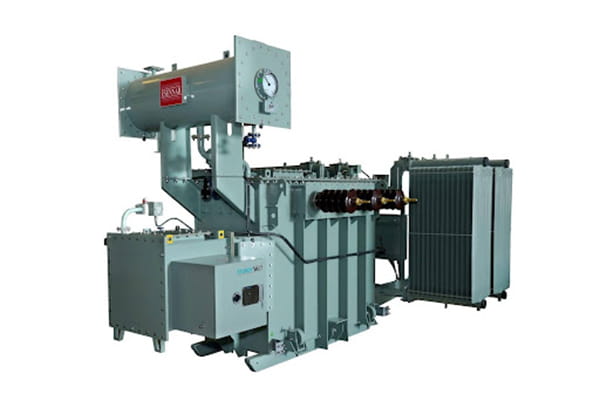
The lowly distribution transformer, a ubiquitous presence on utility poles and in substations around the globe, is quietly revolutionising. With the globalisation of energy systems turning towards decarbonisation, digitalisation, and an increased efficiency, the production of these essential grid elements is currently being reformed by the influential tendencies. The factory of the future will create more efficient and environmental-friendly transformers but, more importantly, smarter and more connected to the digital grid environment.
The urgent driving force is the insatiable tendency towards the increased energy efficiency with the strict international rules and utility life cycle cost formulations. Manufacturers are shifting away towards conventional grain-based electrical steel. There is a fast growing adoption of amorphous metal cores. Although amorphous metal transformers may cost more in the first place in terms of materials, this type of device can save core losses (up to 70-80 percent) in comparison with the traditional ones, which can provide colossal savings during a 25-30 years period of operation. At the same time there is the development of nanocrystalline alloys and improved grades of silicon steel that are giving additional avenues to reduce no-load losses.
Traditional mineral oil is being phased out because of environmental and safety concerns. The future is malleable- biodegradable ester fluids. Such fluids provide high fire point, better biodegradation and great moisture retention. Its capability to increase the life of the paper insulation is a significant expression of operation. Moreover, studies on gas-insulated and solid-state transformers are ongoing, especially on niche applications, where fire safety is the main factor and the use of fluids is not allowed. Such a change is forcing manufacturers to re-engineer sealing systems, take into account the compatibility of materials, and establish new testing and filling procedures.
The distribution transformer is starting to be a smart grid node. The transformer will have sensors, communication modules and onboard analytics integrated seamlessly into the manufacturing in the future. The real-time monitoring of key parameters such as temperature, load, dissolved gases, moisture, and partial discharges will be done using the IoT platforms. This allows predictive maintenance, changing time-based to condition-based maintenance, preventing failures, and maximising asset life.
Technology is evolving and altering factory floors. The creation of additive manufacturing of intricate components such as cooling ducts and structural components. Core stacking and winding is enhanced in parameters of precision, quality and safety by automation and robotics. Digital twin technology enables manufactures to optimise the design of the transformers with simulating performance, thermal behaviour, and stress points. Orders that are highly customised and must include very small batches or instead have a high degree of customisation are driving the production of flexible, modular products capable of meeting the needs of solar farms, EV charging hubs, and data centres without affecting quality or cost.
The coming years in distribution transformer manufacturing is not just about a few changes; it's the result of many different fields coming together, including material science, digital technology, and environmental stewardship. The finished result will be an environmentally friendly, highly efficient, and sensor-rich tool that helps with both grid resilience and decarbonisation.
Manufacturers who are able to adapt to these new trends—changing from metal-benders to companies that provide integrated energy management solutions—will help make the future grid more flexible, environmentally friendly, and smart. The transformer will still be physically central to distribution, but its job will change and it will have different smart technology inside it.
Related Link: WHY HIGH-QUALITY POWER TRANSFORMERS MATTER FOR INDUSTRIAL OPERATIONS
 Chat with Us