



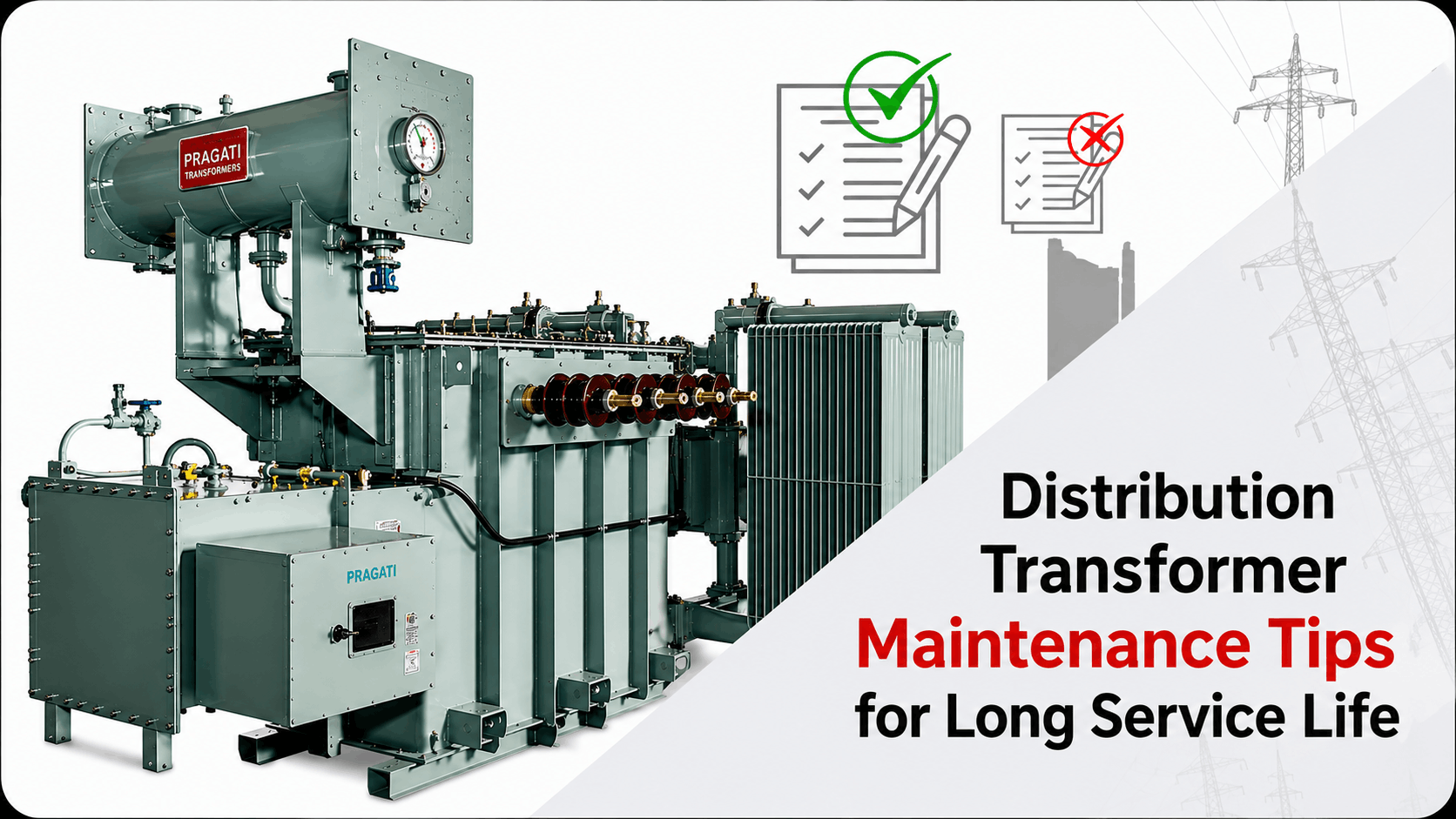
Distribution transformers are an essential part of any electrical distribution system. They are mostly used to lower the high voltage electricity to the levels that can be used in homes, commercial buildings, factories and public infrastructures. This device is operational 24/7 and requires regular maintenance to ensure they work consistently at all times.
If properly maintained, a distribution transformer can remain in service for 25 to 40 years or more. Regular inspections and preventive maintenance not only help increase reliability but also help identify potential problems before they become major failures.
Distribution transformers are subjected to various electrical loads, weather conditions, humidity, dust and environmental pollution. These aspects can have an adverse effect on the overall performance of the transformer with time.
Regularly maintaining helps:
First, preventative maintenance is always less expensive than emergency repairs or replacement of a transformer.
Visual inspection is one of the easiest ways to catch potential problems early.
When you check, look for:
If you have even a small leak or loose connection, you want to take care of it before it becomes a bigger problem.
Oil-filled distribution transformers use insulating oil for two important purposes:
Bad quality oil can degrade transformer performance and damage the internal insulation.
Routine oil checks should include:
If the oil is dirty or has gone bad you may need to strain it or add new oil.
Dust, dirt, leaves and industrial pollution can all build-up on the surfaces of transformers and inhibit cooling.
Cleaning shall consist of:
Clean equipment runs more efficiently and has less chance of insulation flashovers. Always use proper safety procedures prior to cleaning energized equipment.
Loose electrical connections cause over-heating, voltage drop and equipment damage.
Regularly check:
Wherever possible, use thermal imaging to find hidden hot spots before they become serious failures.
Heat is one of the most important factors affecting the life of a transformer. High operating temperatures reduce the life of the transformer and the life of the insulation.
Keep an eye on:
Check the operating temperatures and if they increase above normal levels investigate immediately.
Bushings are used for insulated electrical connections through the tank of the transformer. Broken bushings are a cause of insulation failure or flashover.
Look for:
Regular cleaning and inspection will help to ensure safe operation.
All transformers generate heat and require a robust cooling system that will ensure the device is operational and does not get worn out over time.
Check by type of transformer:
Restricted airflow or failure of cooling equipment can greatly reduce the life of a transformer. Provide sufficient space around the transformer for adequate air circulation.
One of the common causes of failure of a transformer before the end of its normal life is overloading.
Running above rated capacity increased:
To prevent overloading:
Working within the rated capacity greatly improves the life of the equipment.
Transformers do age with the insulation over time. Periodic insulation resistance testing can detect moisture, contamination or insulation deterioration before it leads to failure.
Typical tests were as follows:
Test results, tracked over a period of time, can yield useful information about transformer health.
A good grounding system protects the transformer and the people.
Routine checks:
Improper grounding enhances the danger to equipment from electrical faults or lightning strikes.
The biggest enemy to transformer insulation is moisture. Water contamination diminishes the insulation strength and increases the possibility of internal faults.
Keep moisture out by:
Good moisture control will extend the life of transformer insulation for many years.
A sound change in a transformer is often a sign of a developing problem. Unusual humming, rattling or vibration may be due to:
Any change in operating noise should be investigated immediately.
Even the best maintenance program requires skilled people. Regular training decreases maintenance errors and increases equipment reliability.
Ensure technicians understand:
Power distribution transformers are essential in any power grid. It is like any other equipment, and needs maintenance on a regular basis to help it do its job well for the duration of its life. Whether it is a simple visual check or an elaborate inspection consisting of a number of tests, these tasks have to be undertaken to minimize failure and optimize performance.
Businesses and utilities can enjoy reliable performance, increased energy efficiency and maximize the return on the transformer investment for years to come by following a preventive maintenance schedule and fixing minor issues before they become major problems.
Related Link: SOLAR INVERTER DUTY TRANSFORMERS FOR COMMERCIAL AND INDUSTRIAL SOLAR PROJECTS
 Chat with Us