



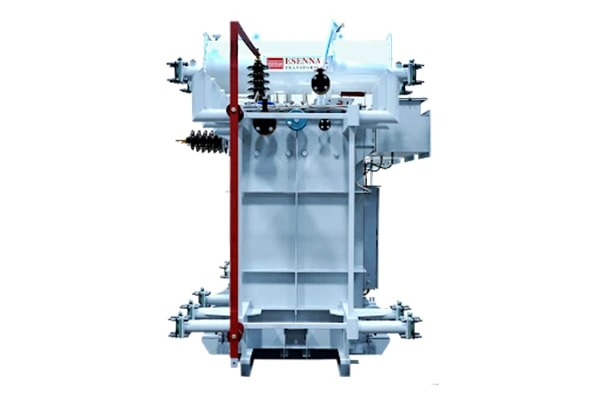
Transformers in the modern solar power plants are not passive voltage converters anymore. As the use of power electronics-based generating systems, especially solar inverters, grows, conventional transformers are generally unable to endure the electrical peculiarities. Inverter duty transformers come in at this stage.
The production and commissioning of transformers in utility-scale solar installations have undergone a massive paradigm shifting design philosophy in the past three decades. Solar applications used standard distribution transformers at one point. A custom solution was, however, required when inverter technology was introduced. The inverter duty transformer is one of the solutions.
Currently, leading manufacturers such as Esennar Transformers develop inverter duty transformers to deal with solar plant harmonics, voltage and thermal stress. The knowledge of the interaction between solar inverters and electrical systems contributes to understanding the preference of this type of transformer.
IGBTs are used in place of smooth sinusoidal generators in solar inverters. These are electrical parts that convert the DC power of the solar panels to the AC power that can be exported into the grid. Switching is effective and also adds harmonics and non-linear loads.
Harmonics compound core and winding losses of the transformers. They produce heat, strain insulation, and can bring about transformer failure in the event they are improperly constructed. Inverters are dynamic switchers even though standard transformers are used with linear loads.
Inverter type transformers are made to withstand harmonic currents without overheating. This is one of their primary merits in solar applications.
Inverter duty transformers have a significant advantage in harmonic tolerance. The winding structure, core construction and insulation system is designed to address the problem of high-frequency component eddy current losses. The delta windings of these transformers prevent the triplen harmonics from being introduced into the upstream grid. This improves the quality of electricity and grid needs.
Anomalous heating in the scope of some major projects involving conventional transformers has been experienced within months of commissioning. Substituted with good-designed inverter duty transformers by reputed manufacturers such as Esennar Transformers, operating temperatures stabilised and the performance was boosted.
The optimum sunshine and ambient temperature provide maximum electricity to solar plants. Many Indian locations are up to 48–50-degree Celsius. Transformers are subjected to extreme heat. Inverter-duty transformers are insulated and cooled in a superior manner. The core is made to reduce stray flux heating and conductor size to minimise copper losses.
A greater thermal performance makes the transformer safe in cases where the inverter is overloaded. New inverters are capable of working with 110% to 125% overload in short bursts. These peaks may put a standard transformer in a strain, yet inverter duty transformers are able to handle the peaks.
Several transformer solar pooling stations should have similar vector group selection to prevent phase difference.
Solar generation is variable in nature because it depends on the movement of the clouds and variations in the irradiance. Such variations may result in high-voltage changes within seconds at the transformer terminals. Inverter duty transformers are made to be able to withstand such dynamic operations without insulation strain or mechanical wear and tear.
They use their impedance and choice of vector group, usually Dyn11, to enable stable grid synchronisation and fault management. The neutral grounding is proper and the short circuit strength is ascertained to guarantee that the transformer will be stable in case of disturbance in the grid.
Other manufacturers, such as Esennar Transformers, also incorporate these parameters into the design phase and the transformer is designed such that it will act as an inverter and the transformer will vertically fit with the grid codes.
Inverter duty transformers are popular because of reinforced insulation. Harmonic stress and switching transient stress can be higher than the insulation limits allow. Inverter duty transformers make use of superior dielectric strengths and thermal resistance insulation to fight this.
This design increases the service life to a great extent. The life of solar plants is supposed to be 25 years and above. The failure of standard transformers by harmonic stress can be expensive and lead to lost man hours. The purchase of a special inverter duty transformer provides reliability.
In order to save costs, the EPC contractor selected a conventional oil-filled transformer for a 20 MW solar project in Gujarat. The transformer increased its peak generation temperature beyond the normal limits after one year. The close examination depicted a high level of harmonic heating. It was substituted by a solar-specific inverter duty transformer by the team that worked on the project. Replacement normalised temperatures and maintained the harmonic distortion at a stable level.
This had proven an initial industry lesson: solar applications need inverter-load transformers, and not distribution models. Esennar Transformers has focused on the development of inverter duty transformers to overcome these practical challenges.
Even though inverter duty transformers could be a little more expensive than ordinary transformers, they lead to a decrease of the long-term operation costs. Less risk of overheating will result in reduced maintenance. Harmonic performance is improved to reduce power losses. The increased insulation guarantees a higher life cycle.
Inverter duty transformers offer a better payoff when analysed over the life cycle of a solar plant. They ensure the security of important electrical installations and avoid unforeseen failures.
The current solar developers have shifted to a focus on reliability rather than low capital saving due to the awareness that failure of transformers may stop power production and affect revenue greatly.
System complexity is increased with the scale of the solar plants and the level of technology. The central inverters, string inverters, and hybrid structures add different load properties. These changing requirements are flexible in inverter duty transformers.
They have strong design, which is capable of higher short circuit withstanding, heat dissipation, as well as performance stability during varied load cycles. This would suit them in both utility-scale and rooftop solar systems.
The major manufacturers such as Esennar Transformers have made sure that their inverter duty transformers meet the requirements of IS, IEC and grid requirements and thus could be used in domestic or international projects.
Transformers Inverter duty transformers are best suited in solar plants since they are able to control harmonics, thermal stress, and voltage variation as well as inverter overload. They replicate the electrical nature of the power electronic systems, as opposed to conventional transformers.
They suit present solar applications perfectly because they have excellent harmonic suppression, insulation, cooling, and reliability. The plant performance and life will be enhanced by a purpose-designed transformer of inverter duty as the industry experience claims over 30 years.
Solar projects can be provided with several decades of dependable operation and grid conformity using a properly designed solution by the proven manufacturers, such as Esennar Transformers. The choice of the right transformer is a strategic outlay in sustainable energy production in the rapidly expanding renewable energy sector.
Related Link: WHAT VECTOR GROUP IS COMMONLY USED IN SOLAR TRANSFORMERS?
 Chat with Us