The distribution of power should be efficient, safe, and reliable in the current industrial and business environment that is very demanding. Cast Resin (dry-type) Transformer is more effective than liquid-filled units in facilities that have critical loads, harsh conditions, or have stringent safety standards. Its fire safety, environmental friendliness, and resiliency are useful in hospitals, data centres, high-rise, manufacturing plants, and renewable energy installation.
Nevertheless, choosing the right unit is a delicate matter that needs to be considered with a few important factors in mind.
ASSESS YOUR ELECTRICAL LOAD REQUIREMENTS
The initial action is a clear examination of the electrical needs of your facility.
| Power Rating (kVA): |
Ascertain the total kVA needed by your load. Always consider the current expansion and the future expansion that can be predicted. Choosing a transformer with the same load or slightly greater load than your estimated load is a way to ensure efficiency and long life so that overload conditions do not arise. |
| Voltage Specifications: |
Make sure you know your input voltages and output voltages that you need. Make sure the transformer is coiled to your desired grid supply and distribution voltage levels. |
| Characteristics of the load: |
Figure out whether or not your load is linear or non-linear. Harmonics are created by non-linear loads and result in extra heating. In case of such applications then you might need a specialised transformer that can manage this stress without de-rating. |
EVALUATE THE INSTALLATION ENVIRONMENT
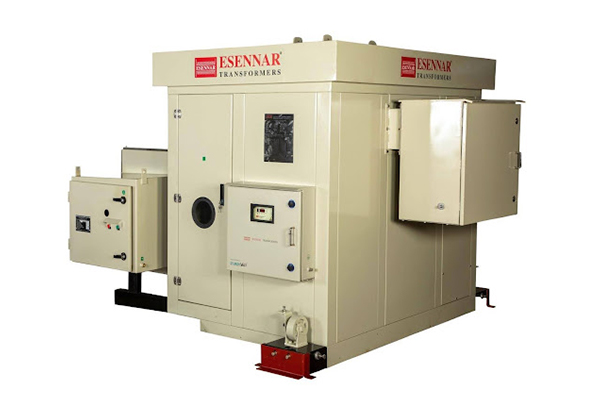
- Indoor vs. outdoor: The Cast resin transformers are best used in an indoor as they are non-flammable. When placing the unit outdoors, you have to indicate a unit with a suitable Enclosure Class (IP Rating). The minimum threshold of IP23 is the standard rating of a covered outdoor application that protects against jets of vertical water and minor objects. Stricter conditions can involve IP45 or greater.
- Ambient Conditions: Consider room temperature, humidity, dust and corrosion. The ambient temperatures can be so high that they require a larger kVA unit or an improved cooling. Transformers located in damp or conductive dusts require better protection and sealing.
- Physical Space and Accessibility: Test the height and footprint of the ceiling. The cast resin transformers are huge compared to those that use oil. Provide adequate ventilation, maintenance and removal. Consider the weight and access of installation.
PRIORITISE SAFETY AND RELIABILITY FEATURES
It is the main benefit of dry-type technology.
- Fire Safety: It is a significant advantage to eliminate flammable insulating oil. They are most secure to fire prone constructions, tunnels and underground ministries. Check transformer resistance to fire.
- Environmental Safety: There are no leaks of oil and hence no risk of contamination of soil or water. This makes installation easier and reduces the liability to the environment.
- Insulation Class: This is the highest temperature that the insulation of the winding can withstand. Class H has better thermal margin and life, particularly in warmer environments.
CONSIDER EFFICIENCY, LOSSES, AND TOTAL COST OF OWNERSHIP
- Energy Efficiency: Evaluate the transformer's no-load and load losses. Lower loss transformers though at times more costly in the short term save a lot of energy in operation throughout a 20-30-year service life.
- Cooling Method: AN (air natural) cooled is used as a standard. AF (air forced) cooling using fans can be utilised to increase capacity in higher rating or space constraints.
- TCO Analysis: Calculate the total cost of ownership: purchase price + cost of electrical losses over the transformer's life + maintenance costs. A low loss, high efficiency model is usually much more cost effective in the long term.
PLAN FOR PROTECTION AND MAINTENANCE
In-house Protection: Order required accessories such as temperature control systems with sensors, alarm and trip contacts about over temperatures, and surge protection.
- Maintenance Requirements: Although cast resin transformers have less maintenance requirements than the oil types, they are not maintenance free. Dust buildup, inspection of cooling ducts and tightness of connexions should be monitored on a regular basis.
FINAL WORD
Selecting an appropriate cast resin transformer is a long-term investment to influence the safety, efficiency and cost of operation of your facility. When you carefully consider your load profile, installation setting, safety requirements and economic considerations over the long term, you can narrow down to a transformer that will perform at its best and is the most reliable.
Related Link: SOLAR INVERTER DUTY TRANSFORMER MANUFACTURERS IN INDIA: WHAT TO LOOK FOR




 Chat with Us