



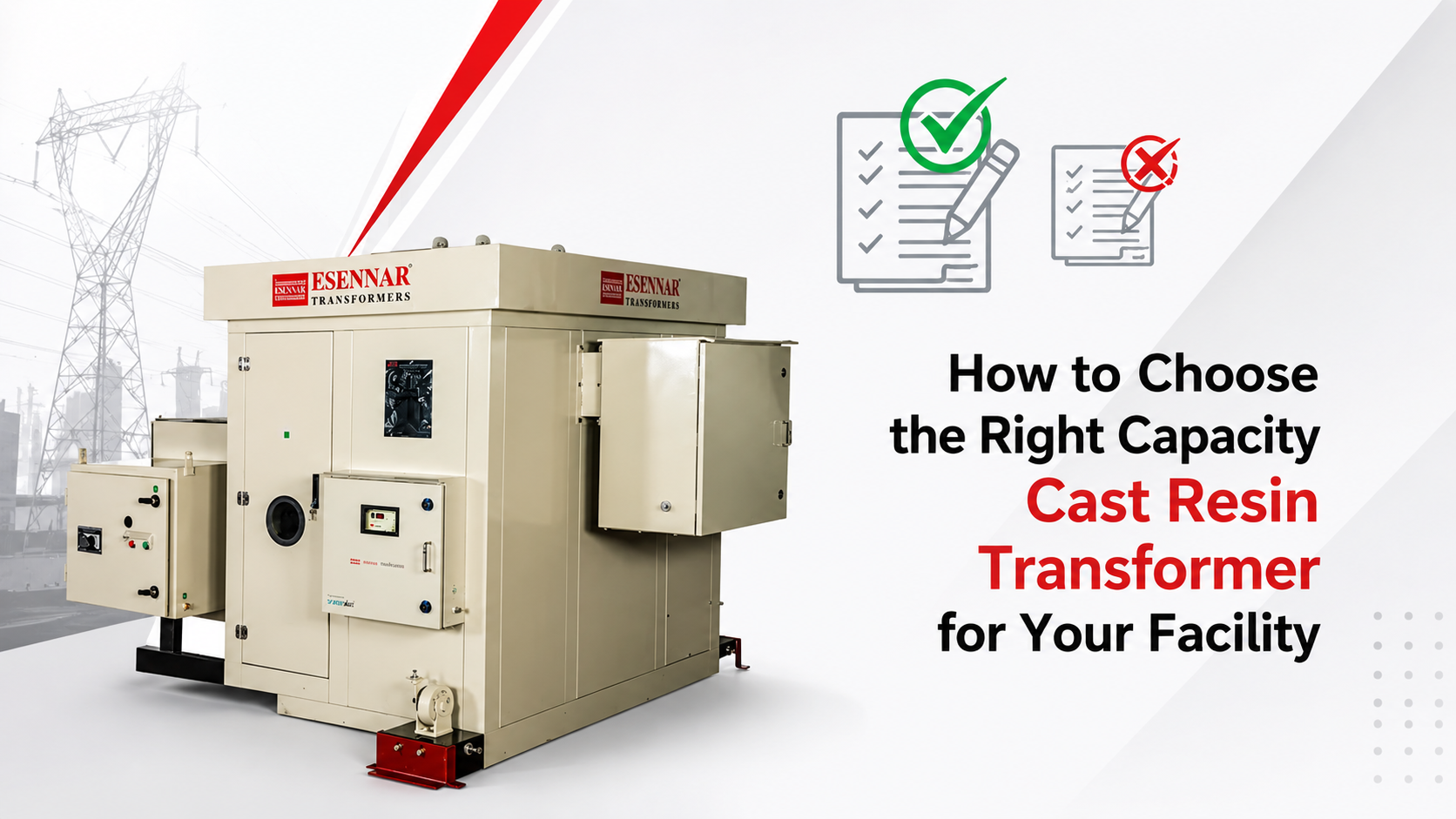
Choosing the correct cast resin transformer is one of the most significant decisions in designing or upgrading an electrical distribution system. Too small a transformer and it will strain to meet demand, whereas if too large, capital costs increase and efficiency drops.
Choosing the right transformer size can be complicated. It is not just about the loads and expansion prospects, but also covers operating conditions and site conditions.
Taking all of these factors into account, companies can maintain balanced power distribution, increase their operational efficiency, and ensure their productivity.
Cast resin transformers are dry-type transformers using epoxy resin rather than insulating oil. They are well adapted to applications and installation conditions where fire and environmental considerations are important.
They are widely used in:
Their maintenance requirements are minimal, and their safety characteristics have further increased their popularity across some industries.
The transformer capacity in kVA (kilovolt-amps) specifies the current load that the transformer can support.
Choosing the wrong capacity can result in:
Sizing correctly ensures operational stability and maximum life of the transformer.
The first step is to determine the integrated electrical load of the building.
This includes:
A detailed load study forms the basis for a correct transformer size.
Maximum demand analysis is used to find the maximum load that is likely to be imposed on the system under normal operating conditions.
Factors to consider include:
Knowing the actual demand helps avoid excessive oversizing.
Facilities may grow in complexity over time.
When selecting transformer capacity, organizations should account for:
A prudent level of capacity reserve enables enough time and resources for a future upgrade.
Transformers are subjected to various loads in different ways.
Examples include:
A load survey has to be done for the proper specification of transformers.
Transformer performance is sensitive to environmental conditions.
Important considerations include:
Facilities situated in a demanding ambient environment may require special consideration in the design or derating of the transformer.
While some facilities operate continuously, others are only intermittently online.
Duty cycle assessment helps determine:
Differing sizes of transformers are used for different modes of operation. The transformer for 24/7 operation will probably be a different size than one for intermittent operation.
Certain industries require uninterrupted power.
Examples include:
These facilities should consider redundancy options, such as the use of parallel transformers.
Choosing a transformer with insufficient capacity can result in:
While excess capacity may seem beneficial, significant oversizing can lead to:
A balanced, correctly sized transformer helps avoid the drawbacks of both undersizing and oversizing.
Selecting the correct capacity offers several advantages:
Together, these benefits lead to an overall lower lifecycle cost and a more efficient system.
Transformer sizing is not just a matter of adding loads. Engineering experience is often required to determine the operating conditions, load profiles, harmonics, and future expansion.
Established manufacturers can be involved in the choice process to recommend solutions that fit the customer's needs.
Esennar assesses each customer's operational needs with the aim of recommending cast resin transformers that provide the best performance, safety, and minimum energy losses.
Esennar guides you with technical consultation, engineering expertise, and application-specific advice to help you determine the transformer sizes necessary to meet present needs and grow along with your organization.
Esennar is a valuable partner for facilities navigating the complex process of defining the transformer's capacity. Esennar helps businesses evaluate their load demands, safety guidelines, and growth plans by combining technical expertise with a sound knowledge of industry standards. Their consultative approach ensures every recommendation is tailored to the facility's specific operating profile to minimize the chances of underperformance or costly oversizing.
In addition to technical calculations, Esennar points out many other, more realistic concerns, such as environmental factors, regulatory responsibilities, and energy efficiency. Facilities managers are thus equipped to make informed decisions that link the immediate needs of the organization to long-term operational benefit.
Working with an established manufacturer like Esennar removes another layer of uncertainty from the decision-making process, helping to select a transformer and confirm that the rating is correct for future successful operation.
Selecting the right capacity cast resin transformer for your application is more than a technical issue; it is an investment in the efficiency and trustworthiness of your facility. Your right choice impacts operational reliability, energy costs, and safety considerations.
Related Link: WHY CHOOSING AN EXPERIENCED POWER TRANSFORMER MANUFACTURER MATTERS
 Chat with Us