



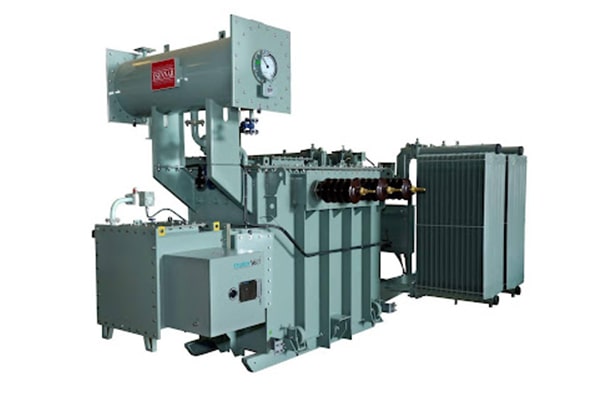
The electricity plays a large role in our lives. We use it in turning on lights, charging phones and many other things. However, have you ever thought about how the power which is produced at the electrical plants can get to your house securely? A distribution transformer is one of the most significant gadgets that facilitate the making of this possible.
Let’s take a detailed but simple look at what distribution transformers are and how they work.
A distribution transformer is a certain kind of electrical appliance which is lessening high-voltage electricity to the lower amount of electricity that may be used in household, office and small businesses. Power generated in power plants is moved over long distances in very high voltages so as to prevent loss of energy. But voltage at higher level is risky and cannot be employed directly within buildings. Here the distribution transformers are used- these transformers reduce the voltage at a point immediately before electric power reaches homes or community structures. Most likely you have encountered a distribution transformer, which tend to be in electric poles (pole-mounted transformers), in metal boxes near houses and hotels (pad-mounted transformers), and buried in cities in vaults. They typically make up the last segment of the electric power delivery system.
Here are the key parts that make a distribution transformer work:
Core: This is the laminated steel core at the center, which helps guide the flow of magnetic flux in the transformer.
Windings (Coils): It is two parts - the primary winding coil receives the high-voltage electricity, while the secondary winding sends out the lower, usable voltage to homes or businesses.
Insulating Oil or Material: This protects the internal parts from overheating and electrical faults. It also helps cool the transformer.
Tank and Casing: This is the outer shell that holds everything together and protects the inner parts.
The electromagnetic induction concept underlies the operation of distribution transformers.
Here’s a step-by-step explanation:
High-voltage electricity enters the primary winding of the transformer, creating a magnetic field in the core.
The secondary winding receives the magnetic field after passing through the core.
A voltage is induced in the secondary winding when the magnetic field changes.
Because the number of turns (loops) in the secondary coil is fewer than in the primary, the voltage is reduced to a safer level.
This low-voltage electricity is then sent out to homes and small businesses.
So, even though there is no physical connection between the primary and secondary coils, electricity is transferred using the magnetic field.
They make electricity safe to use.
They help reduce energy loss when power travels long distances.
They ensure consistent power reaches every home and office.
They are reliable and usually work for many years with little maintenance.
Distribution transformers may look like ordinary metal boxes on poles or sidewalks, but they do an extraordinary job. By stepping down high voltage to a safe level, they make it possible for us to use electricity every day without danger. Simple in operation but powerful in purpose, distribution transformers are one of the unsung heroes of our modern electric world.
Related Link: WHAT ARE POWER TRANSFORMERS AND HOW DO THEY WORK?
 Chat with Us