



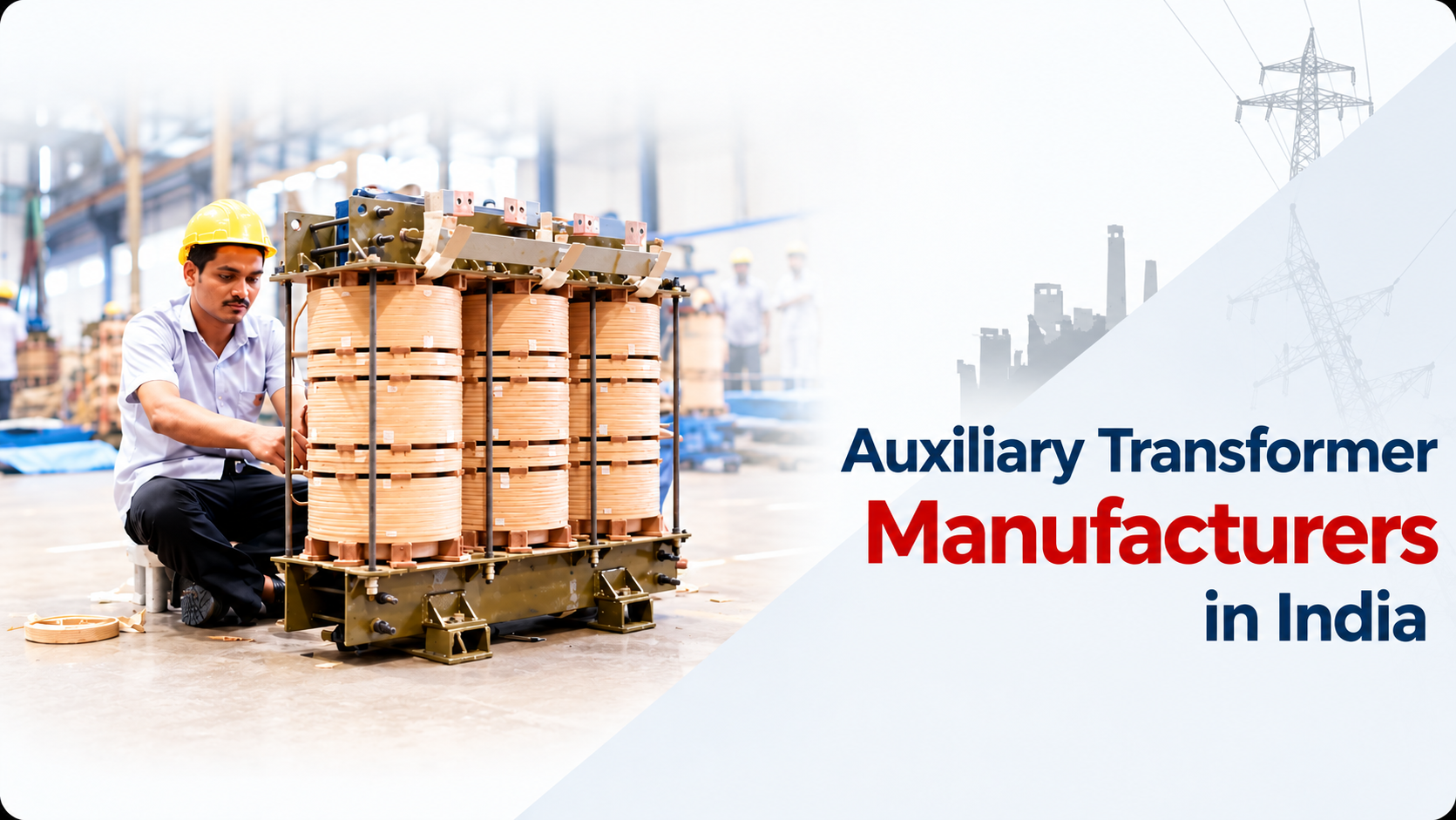
The auxiliary transformers are important components of the modern electrical power systems. These are used to power auxiliary equipment and critical systems in power plants, substations, industrial plants, manufacturing facilities and infrastructure projects. The choice of a proper manufacturer of auxiliary transformers is of the utmost importance because the quality of the transformer directly impacts the safety, reliability, efficiency and continuity of an electrical system.
There are multiple auxiliary transformer manufacturers in India, providing different products and services. As a buyer, it is our duty to understand the requirement before making any decision. This guide outlines the main points to consider when choosing a trusted manufacturer.
Auxiliary transformers are used to supply electricity to systems that provide support to the main operation of any production plant. Depending on the application, it can be used for lighting, pumps, cooling equipment, control panels, fans, motors and other ancillary loads.
The transformer shall be properly designed for the voltage, load, operating conditions and specific requirements of the installation.
Auxiliary Transformer is a very important electrical device. When the device is poorly built, it can result in energy loss, overheating, and potential damage over time. This will only lead to further expense and increased downtime.
Having a credible manufacturer partner involved as well can make the buying and install process easier, especially with custom transformer needs.
When you consider a potential manufacturer, it is a must to choose a company with considerable experience. Such companies are likely to have more understanding of the field, allowing buyers to choose transformers that meet their exact needs.
Experience can be very important when the transformer needs to be customized for specific voltage ratings, capacity, installation conditions or industrial requirements.
Quality should be one of the most important factors when comparing manufacturers of auxiliary transformers in India. The transformer shall be of the proper materials and components and shall be properly tested before delivery.
A quality-minded manufacturer must have good inspection and testing procedures to reveal potential problems before the transformer goes to the customer.
Electrical transformers shall meet the applicable technical and safety requirements. Make sure that the device is fully tested to meet all relevant standards of the industry and also that of the application.
Good documentation gives more assurance that the transformer was built and tested to specified requirements.
Different electrical installations have different requirements. Depending on the exact task, some transformers may require very specific ratings, dimensions, cooling mechanism, and other related mechanisms.
A good manufacturer should understand your technical requirements and suggest a suitable configuration.
A manufacturer with strong engineering capabilities can help develop a solution that matches the real operating conditions of the application.
The purchase price is important but not the only thing to consider. Transformers have a long lifespan, going up to 20 years or more. Hence, it is crucial to gauge their performance and efficiency levels at the start so buyers can determine the cost of owning the equipment.
Therefore, a more efficient transformer can help reduce energy losses in operation. Reduced losses over the service life of the equipment may result in lower electricity use and operating costs.
When comparing manufacturers, consider both the initial investment and the long-term performance.
A manufacturing infrastructure can give useful information on its capability to deliver reliable products. Modern manufacturing equipment, controlled production processes and appropriate testing facilities can help to ensure consistent quality of the transformers.
Check whether the manufacturer has facilities to perform required electrical, mechanical and performance tests. Before shipment, the transformer is tested to ensure that it meets the required specifications.
The manufacturer’s responsibility should not end with transformer delivery. Installation support, commissioning help, troubleshooting, maintenance guidance and spare parts can be invaluable during the operating life of the equipment.
Downtime can be minimised when technical problems arise by a manufacturer who offers good after-sales service.
Price is an important consideration in any buying decision, but the cheapest transformer isn’t always the best way to go. The low initial price can be expensive if the equipment has high energy losses, needs frequent maintenance or has a short service life.
Don’t just compare prices but the total value eachmanufacturer provides. Quote price as well as product quality, efficiency, customization, testing, warranty, delivery and technical support.
 Chat with Us